
Posted by Jvl Classicware
on August 12, 2026

Boiling milk sounds like one of the easiest kitchen tasks, but anyone who has cleaned spilled milk from a stovetop knows how quickly it can become a mess. You leave the milk on the stove for what feels like a minute, turn away, and suddenly it has foamed up and spilled everywhere.
So, how to boil milk without overflow?
The good news is that preventing milk from spilling does not require complicated techniques. The right vessel, appropriate heat, enough space, and a little attention can make a big difference. If you regularly boil milk for tea, coffee, curd, sweets, or everyday cooking, these simple milk boiling tips can help you avoid repeated spills.
And if milk overflow happens frequently despite taking precautions, switching to a purpose-designed stainless steel milk boiler can make the process much easier.
Why Does Milk Spill While Boiling?
Before learning how to prevent milk from boiling over, it helps to understand why it happens.
Milk behaves differently from plain water when heated. It contains proteins, fats, sugars, and other solids. As milk gets hotter, proteins and fats contribute to the formation of a thin layer and foam on the surface.
Steam produced underneath this layer needs to escape. When the foam becomes thick enough, the steam pushes upward and the milk rapidly rises. This is why milk can appear perfectly calm one moment and overflow a few seconds later.
Several factors can increase the chance of milk overflow:
- High flame or excessive heat
- A narrow or unsuitable vessel
- Filling the vessel too much
- Leaving milk unattended
- Uneven heating
- Not stirring occasionally
- Using a vessel with insufficient headspace
- Sudden temperature increases on an induction cooktop
The key is to control both the heat and the amount of foam while giving the milk enough room to rise.
How to Boil Milk Without Overflow
Here are practical methods you can use in an Indian kitchen to reduce milk spills.
1. Use the Right Size Vessel
One of the easiest ways to prevent milk overflow is to avoid using a vessel that is too small.
Milk needs room to expand and foam while boiling. If you fill a small pot almost to the top, even a moderate amount of foam can quickly reach the rim.
As a general rule, try to fill the vessel only around 60–70% of its capacity.
For example, if your vessel can hold 1 litre, avoid filling it completely with 1 litre of milk. Leaving sufficient space allows the milk foam to rise without immediately spilling over.
A wide-mouth vessel can also be helpful because it provides more surface area and makes it easier to monitor and stir the milk.
2. Keep the Heat at Medium or Medium-Low
High heat is one of the most common reasons milk boils over.
You may think that increasing the flame will boil the milk faster, but rapid heating can create foam quickly and give you less time to react.
Instead:
- Start with medium heat.
- Allow the milk to warm gradually.
- Reduce the heat as the milk approaches boiling.
- Avoid leaving the milk on maximum flame.
- Watch for the first signs of rising foam.
This is especially important when using an induction cooktop because the heat level can remain high and continue heating the vessel even after you notice the milk beginning to rise.
3. Stir the Milk Occasionally
Stirring is a simple milk spill prevention technique.
As milk heats, a layer can develop on the surface. Gentle stirring helps disturb the surface and distribute heat more evenly.
You do not need to stir continuously. Instead, stir the milk periodically while it is heating and become more attentive as it approaches boiling.
A long-handled spoon can make this easier and safer.
4. Try the Wooden Spoon Method
The wooden spoon method is one of the traditional kitchen tricks used to help control milk foam.
Place a clean wooden spoon horizontally across the top of the vessel. As foam rises toward the spoon, it can disrupt the bubbles and help delay the foam from immediately spilling over.
However, this should not be treated as a guaranteed solution.
The wooden spoon does not mean you can leave boiling milk unattended. Heat control and proper vessel capacity are still important.
Think of it as an additional anti-spill technique rather than a replacement for supervision.
5. Do Not Fill the Vessel to the Top
Overfilling is an easy mistake to make, particularly when boiling a large quantity of milk.
Even a well-designed pot can overflow if there is not enough empty space.
For safer boiling, leave enough headspace above the milk. Keeping the fill level around 60–70% of the vessel's capacity gives foam more room to expand.
This is one of the simplest tips to stop milk overflow and does not require any special equipment.
6. Use a Wide-Mouth Stainless Steel Vessel
The vessel you use has a major effect on the boiling process.
A narrow vessel provides less room for surface foam to spread. A wider vessel can provide more surface area and make it easier to observe the milk as it heats.
A good-quality stainless steel pot can also be useful for everyday kitchen cooking because it is durable, easy to clean, and suitable for repeated use.
If boiling milk is part of your daily routine, choosing the right vessel can be more effective than constantly trying to manage an unsuitable pot.
How to Boil Milk Properly on an Induction Cooktop
Many people experience milk overflow after switching from a gas stove to induction.
The basic principles remain the same, but heat control becomes particularly important.
Follow these steps:
- Pour milk into a suitable induction-compatible vessel.
- Do not fill it beyond approximately 60–70% capacity.
- Begin with a moderate heat setting.
- Stir the milk occasionally.
- Watch carefully as it approaches boiling.
- Reduce the heat when foam begins forming.
- Once the milk reaches the desired boil, switch off or lower the heat immediately.
Avoid using maximum induction power simply to reduce boiling time. Rapid heating can make it easier for milk foam to rise unexpectedly.
What Is the Best Vessel for Preventing Milk Overflow?
If you regularly ask, “How do I stop milk from overflowing?”, the answer is not only about changing your cooking technique.
The vessel itself matters.
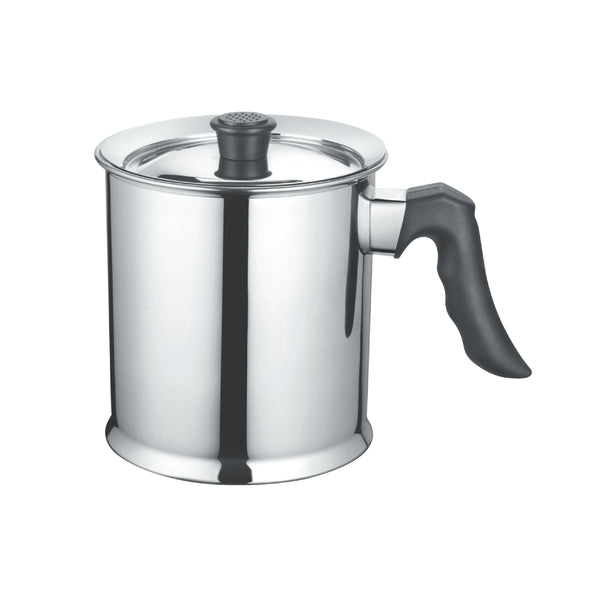
A purpose-built milk boiler can make everyday milk boiling more convenient because its design is intended specifically for heating milk. Instead of relying entirely on constant monitoring, you can choose a vessel designed around the common problems associated with milk boiling.
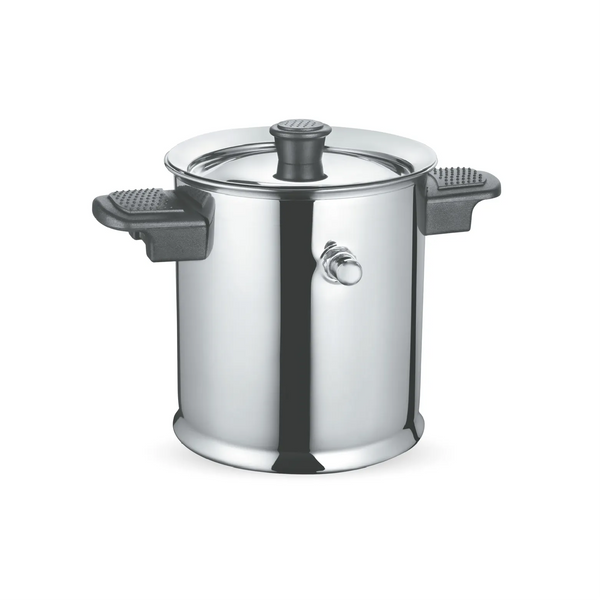
A dedicated Stainless Steel Milk Boiler with Double Handle can be a practical option for households that boil milk regularly. The double-handle design can make handling the vessel more convenient while its stainless steel construction suits everyday kitchen use.
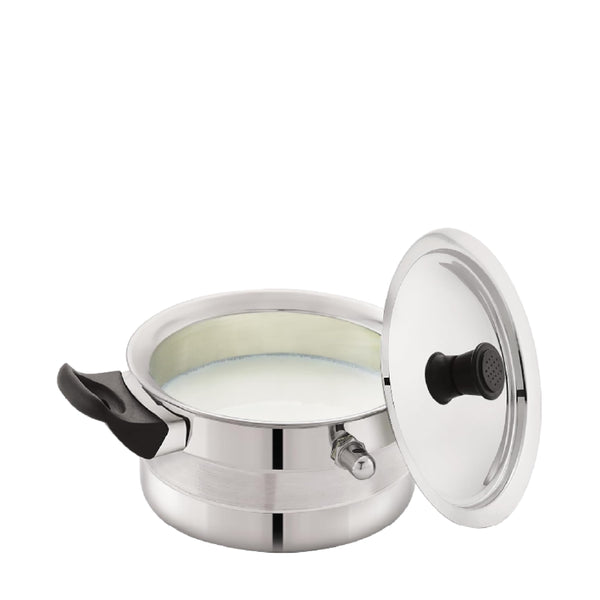
Another option is a Flat Milk Boiler, which can be considered by people looking for a dedicated vessel for everyday milk heating and boiling.
You can explore the Flat Milk Boiler here:Flat Milk Boiler
Common Mistakes That Cause Milk to Overflow
Sometimes the problem is not the milk itself but the way it is being heated.
Avoid these common mistakes:
- Using maximum heat: High heat encourages rapid foam formation.
- Using a vessel that is too small: There is not enough room for expansion.
- Filling the vessel completely: Milk foam quickly reaches the rim.
- Walking away from the stove: Milk can rise very quickly once it reaches boiling temperature.
- Ignoring the surface: A thick surface layer can trap steam beneath it.
- Using an unsuitable vessel: A dedicated milk boiler can provide a more convenient solution for regular milk boiling.
- Ignoring induction heat settings: High induction power can make milk rise faster than expected.
A Simple Milk Boiling Method for Everyday Use
If you want a simple routine to follow every morning, use this method:
Step 1: Choose a vessel with enough capacity.
Step 2: Pour in the required amount of milk, leaving plenty of headspace.
Step 3: Start heating at medium temperature.
Step 4: Stir occasionally while the milk warms.
Step 5: As the milk approaches boiling, stay near the stove.
Step 6: Reduce the heat when you see foam developing.
Step 7: Once the milk reaches the desired boil, turn off the heat.
This method combines the most important elements of boil-over control: vessel capacity, heat setting, surface movement, and attention.
Is an Anti-Overflow Milk Boiler Worth It?
For someone who boils milk only occasionally, basic techniques may be enough.
But if you boil milk every day, repeatedly cleaning milk from the stovetop can become frustrating and time-consuming. In that situation, investing in a dedicated milk boiler can be a practical kitchen upgrade.
The biggest advantage is convenience. Instead of depending entirely on timing and constant supervision, you are using a vessel designed specifically for the job.
For Indian households where milk is regularly used for tea, coffee, breakfast, cooking, sweets, and other recipes, the right milk boiler can make a routine task easier.
Final Thoughts
Learning how to boil milk without overflow is mostly about controlling heat, leaving enough space, using an appropriate vessel, and paying attention as the milk approaches boiling.
The most useful tips are simple:
- Keep the heat moderate.
- Avoid overfilling the vessel.
- Use a wide-mouth vessel where appropriate.
- Stir the milk occasionally.
- Never leave heating milk completely unattended.
- Reduce heat as soon as foam starts rising.
- Consider a dedicated milk boiler if you boil milk frequently.
If milk overflow is a daily problem, changing the vessel may be the simplest long-term solution. A purpose-built stainless steel milk boiler can make everyday milk boiling more convenient while reducing the frustration of repeated spills.
You can also browse the complete milk boiler collection to compare available options:Milk Boiler Collection
Frequently Asked Questions
1. How do I boil milk without it overflowing?
Use a vessel with enough capacity, fill it only around 60–70%, and heat the milk over medium or medium-low heat. Stir occasionally and reduce the heat as soon as foam begins forming. Most importantly, do not leave boiling milk unattended.
2. Why does milk spill while boiling?
Milk contains proteins and fats that contribute to surface foam. As the milk heats, steam forms underneath this surface layer. When the foam becomes thick and the steam cannot escape easily, the milk rises rapidly and can overflow.
3. Does a wooden spoon prevent milk from overflowing?
A wooden spoon placed across the top of the vessel can disrupt rising foam and may delay an overflow. However, it is not a guaranteed solution. Proper heat control, enough vessel capacity, and supervision are still necessary.
4. What is the best way to boil milk on an induction cooktop?
Use an induction-compatible vessel and start with moderate heat instead of maximum power. Keep enough space above the milk, stir occasionally, and reduce the temperature as the milk approaches boiling. Induction cooking requires particular attention because high heat can make milk rise quickly.
5. How much milk should I put in a milk boiler?
As a general guideline, avoid filling the vessel completely. Keeping the milk level around 60–70% of the vessel's total capacity leaves room for foam to rise and helps reduce the risk of spills.
6. Is a milk boiler better than a regular stainless steel pot?
A dedicated milk boiler can be more convenient if you boil milk frequently because it is designed specifically for milk heating. A regular stainless steel pot can work, but choosing the right capacity, controlling the heat, and monitoring the milk become more important.
You can explore the Stainless Steel Milk Boiler with Double Handle here:Stainless Steel Milk Boiler with Double Handle