Every Indian kitchen has the same story. You put the milk on the flame, turn around for thirty seconds to do something else, and come back to find it boiling over across the stovetop. It happens every morning, and every time it does, it means a stovetop to scrub, wasted milk, and the frustration of a task that should be the simplest thing in the kitchen.
The JVL milk boiler is designed to end that story permanently. Built from food-grade stainless steel with a double-wall construction and a built-in whistle mechanism, the JVL milk boiler takes the guesswork and the watchfulness completely out of boiling milk. You fill it, place it on the flame, and go about your morning. The whistle tells you exactly when the milk is ready. No overflow, no burning, no stovetop mess.
JVL's stainless steel milk boiler collection is available in single-handle and double-handle designs across multiple capacities from 1 litre to 3 litres, compatible with both gas stoves and induction cooktops. Whether you need a compact milk boiler for one or two cups or a larger vessel for a full family's morning milk, chai, and coffee requirements, you will find the right option right here.
THE PROBLEM WITH BOILING MILK THE ORDINARY WAY
Boiling milk is one of the most deceptively difficult tasks in the kitchen. It is not difficult because of technique. It is difficult because of timing. Milk behaves in a uniquely uncooperative way — it sits at below boiling point for minutes without any visible change, then transitions to a full rolling boil and overflow in a matter of seconds. Unlike water, which gives clear visual cues as it approaches boiling, milk gives almost no warning before it is too late.
The result is a daily challenge for millions of Indian households. Someone has to stand by the stove and watch the milk constantly. Any distraction — a child calling, a phone ringing, a doorbell sounding — creates the exact gap in attention that milk needs to overflow. And when milk overflows on a hot stovetop, the cleanup is significantly more difficult than the original task of watching it. Milk burns into stovetop surfaces, blocks burner holes, and creates an odour that lingers long after the stovetop has been cleaned.
Beyond the mess, there is also the quality concern. Milk that overflows has often been exposed to excessive heat, which affects its taste and creates the characteristic skin or membrane that forms on the surface of overheated milk. For households that boil milk daily for drinking, making chai, preparing coffee, or feeding young children, the quality of the boiling process directly affects the quality of every cup.
The JVL stainless steel milk boiler addresses both of these problems in a single, elegantly designed vessel.
HOW A MILK BOILER WORKS. THE DOUBLE-WALL MECHANISM EXPLAINED
A milk boiler is not simply a pot with a lid. It is a purpose-engineered double-wall vessel that uses a controlled steam mechanism to heat milk gradually, safely, and without overflow.
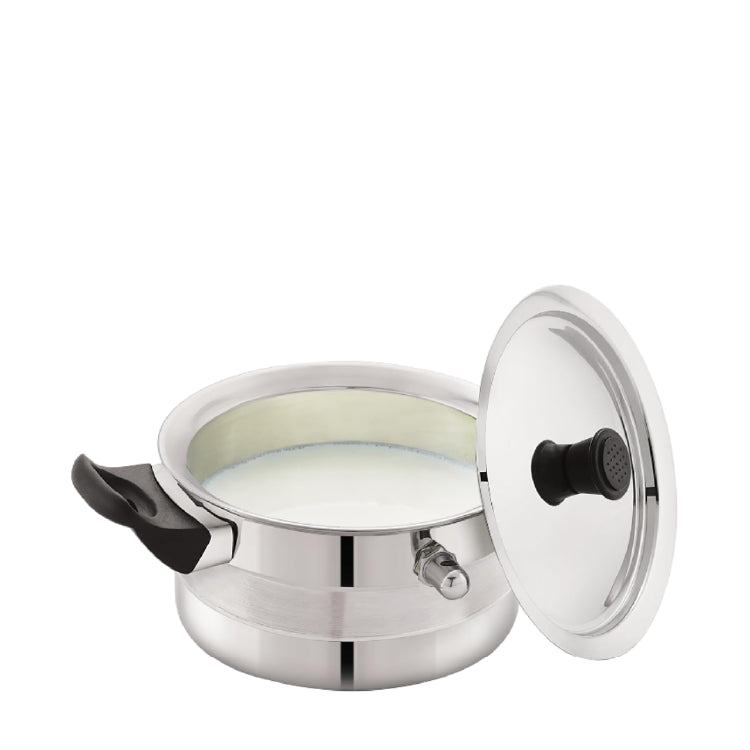
The outer wall of the milk boiler holds water. The inner vessel holds the milk. When the milk boiler is placed on the flame, the heat reaches the outer water chamber first. The water in the outer chamber heats and generates steam. This steam then transfers heat gradually and evenly to the inner milk vessel through the wall between them, rather than applying direct flame heat to the milk surface.
Because the milk is heated by steam transfer rather than direct heat, the temperature rise is slower and more controlled than in an ordinary open pot. This controlled heating means the milk reaches boiling point more gradually, giving the steam pressure time to build in the outer chamber. When the milk approaches boiling point, the steam pressure in the outer chamber activates the whistle mechanism built into the lid. The whistle sounds, alerting you that the milk is ready.
The double-wall construction also acts as a physical barrier against overflow. Because the milk is contained in the inner vessel with its own fitted lid, even if the milk rises during boiling, it cannot spill directly out of the vessel the way it would in an open pot. The outer chamber catches and contains any overflow from the inner vessel before it can reach the stovetop.
This is the mechanism behind the JVL stainless steel milk boiler, and it is why a milk boiler with whistle is considered by most Indian households that have used one to be one of the most genuinely useful kitchen purchases they have made.
WHY JVL STAINLESS STEEL IS THE RIGHT CHOICE FOR YOUR MILK BOILER
Not all milk boilers on the market are built to the same standard. Material quality, whistle reliability, handle safety, and build consistency vary enormously between products. Here is why the JVL stainless steel milk boiler consistently stands out.
Food-Grade Stainless Steel Throughout
The inner vessel of your milk boiler is in direct, sustained contact with heated milk every single day. The material of that inner vessel matters enormously for the safety and taste quality of your milk. JVL milk boilers are constructed from food-grade stainless steel — the same material standard used in professional kitchens and food-processing facilities. This steel is completely non-reactive, meaning it will not interact with the milk chemically, will not leach any substance into the heated milk, and will not affect the taste or nutritional quality of the milk in any way.
This is a particular concern with lower-quality milk boilers that use sub-standard steel grades or aluminium inner vessels. Aluminium reacts with the acidic compounds in milk during prolonged heating and can impart a slight metallic taste. Food-grade stainless steel has none of these issues. The milk you boil in a JVL stainless steel milk boiler tastes exactly as it should, every time.
Rust-Free for Daily Use
A milk boiler is used every day, washed every day, and stored in a kitchen environment where moisture is constant. Rust resistance is not a bonus feature in this context. It is a basic requirement. Food-grade stainless steel is inherently rust-resistant and will remain so across years of daily use, provided it is cleaned with mild soap and dried properly after use. There are no coatings that can flake, no surfaces that degrade, and no parts that require special treatment to maintain their rust-free performance.
Built-In Whistle with Reliable Alert Mechanism
The whistle on a milk boiler is its most functionally important feature, and the reliability of that whistle is what determines whether the product actually solves the problem it is designed for. A whistle that sounds too late is a whistle that lets the milk boil over before it alerts you. A whistle that sounds inconsistently is no better than not having one at all.
JVL's milk boiler whistle mechanism is calibrated to alert at the correct stage of the boiling process, giving you enough time to remove the vessel from the heat before overflow can occur. The alert is audible from another room, making it functional for the exact real-world scenario it is designed for — someone who has put the milk on and moved elsewhere in the house to continue their morning routine.
Cool-Touch Bakelite Handles and Lid Knob
A milk boiler reaches high internal temperatures during operation. The handle and lid knob of the vessel need to remain cool enough to touch safely throughout the heating process. JVL's milk boilers feature cool-touch bakelite handles and a bakelite lid knob that do not conduct heat from the vessel during boiling. You can safely pick up, move, and pour from the JVL milk boiler without the risk of burns to your hands, even when the vessel is fully heated.
This is a detail that matters particularly for daily morning use, when people are often moving quickly and not fully alert. A handle that remains cool removes a genuine safety risk from the most common kitchen task of the day.
Curved Pouring Edge for Spill-Free Serving
Once the milk is boiled, you need to pour it cleanly into cups, chai vessels, or a storage container. JVL's milk boilers feature a curved edge designed to direct the flow of milk during pouring without drips or splashing. This small design detail eliminates the minor mess that a straight-edged vessel creates when pouring warm milk, keeping your countertop and cups clean during serving.
Gas and Induction Compatible
Indian kitchens use a variety of cooking surfaces, and many households have both a gas stove and an induction cooktop in the same kitchen. JVL's stainless steel milk boilers are compatible with both gas and induction cooking surfaces, meaning you do not need to own different milk heating vessels for different stove types. One JVL milk boiler works across both, making it the practical choice for any kitchen configuration.
THE JVL MILK BOILER RANGE. SINGLE HANDLE AND DOUBLE HANDLE OPTIONS
JVL offers its milk boiler in two handle configurations to suit different kitchen preferences and usage habits.
Single Handle Milk Boiler
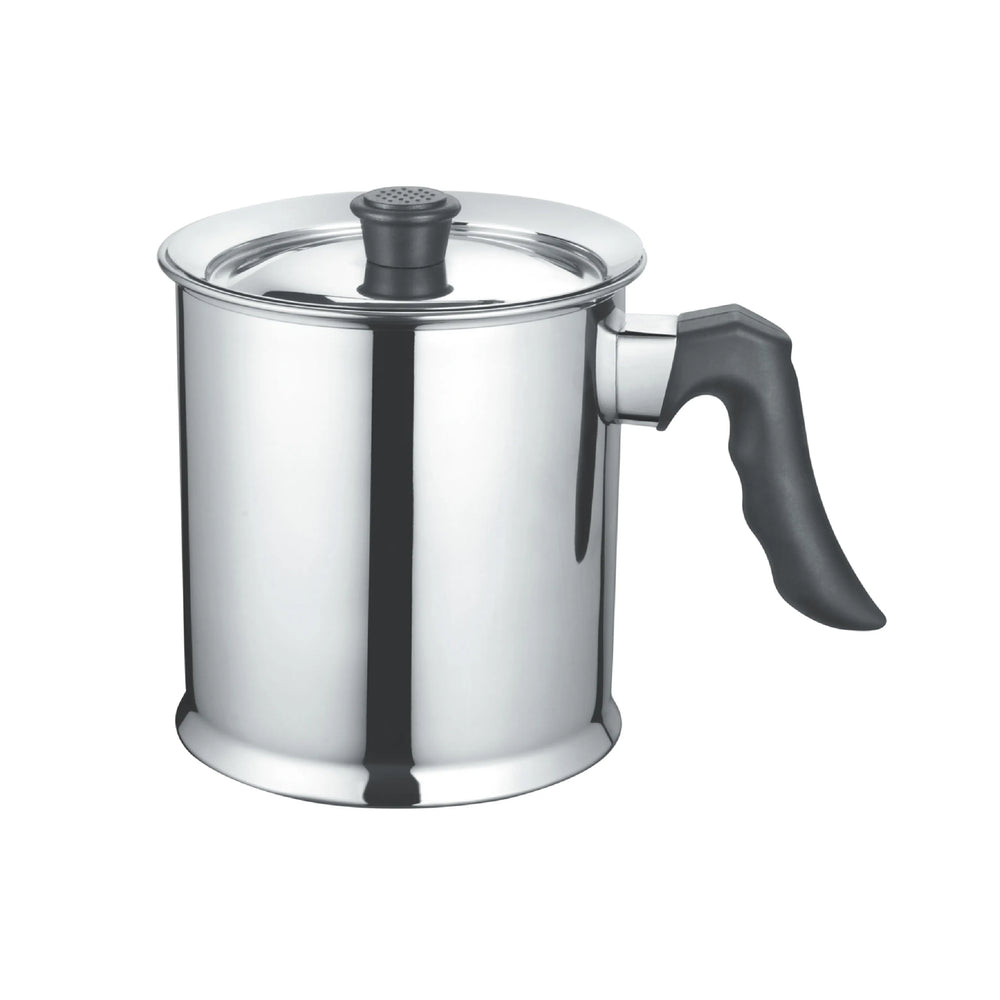
The single-handle milk boiler is the standard configuration and the most popular choice for individual use and smaller households. The single handle design is compact and lightweight, fitting easily on a standard gas burner or induction cooktop without taking up unnecessary space. It is easy to lift, move, and pour from with one hand, making it the most manoeuvrable option for quick daily milk boiling.
The single-handle variant is particularly well suited for boiling single or double servings of milk at a time — for an individual cup of chai, a child's morning glass of milk, or a small household's daily requirement. Its compact footprint also makes it easy to store in a kitchen cabinet or on a shelf without occupying significant space.
Double Handle Milk Boiler
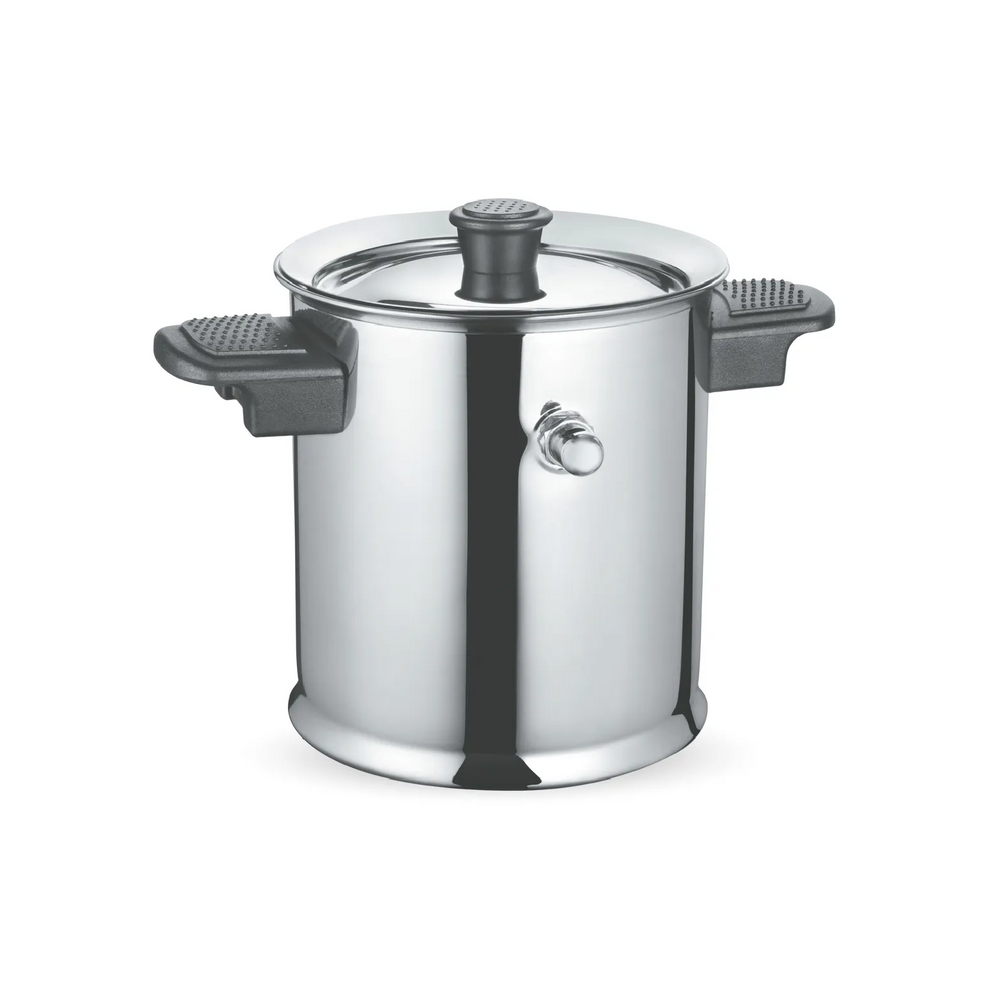
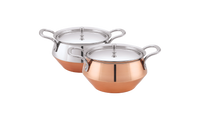
The double-handle milk boiler is designed for households that boil larger quantities of milk at one time and require the added stability and control that two handles provide. With a handle on each side of the vessel, the double-handle configuration allows a firm two-handed grip when lifting, pouring, and moving a full, hot milk boiler — particularly important when handling larger capacity vessels where the weight of the milk inside is greater.
The double-handle design is also preferred by those who find the balance of a larger vessel easier to manage with both hands, and by households where multiple people might use the milk boiler in the morning and the two-handed handling method reduces the risk of accidental drops or spills.
Both the single-handle and double-handle JVL milk boilers are available in the same capacity range, with the same food-grade stainless steel construction, the same whistle mechanism, the same cool-touch bakelite components, and the same gas-and-induction compatibility.
HOW TO CHOOSE THE RIGHT MILK BOILER CAPACITY
Choosing the right capacity for your milk boiler depends on how much milk your household uses daily and what you use boiled milk for. Here is a straightforward guide.
1 Litre Milk Boiler
The 1 litre milk boiler is suited for individuals or couples who boil milk in small quantities for personal use. It is compact, lightweight, and heats milk quickly, making it ideal for a single serving of chai or a cup of warm milk before bed. For households that buy milk in small quantities or only boil milk occasionally, the 1 litre capacity is the most practical choice.
1.5 Litre Milk Boiler
The 1.5 litre capacity is the sweet spot for small to medium Indian households — typically a family of two to three people. It holds enough milk for two or three large cups of chai or warm milk simultaneously, and its size remains compact enough for easy handling and storage. The 1.5 litre milk boiler is the most versatile option in the JVL range and is the most frequently purchased capacity for daily home use.
2 Litre Milk Boiler
The 2 litre milk boiler is designed for medium to large households — typically families of four or more. It comfortably boils enough milk for a full family's morning chai and drinking milk requirements in a single boiling cycle, reducing the need for multiple batches. For households that use milk heavily for cooking, preparing desserts like kheer, or making large quantities of chai for guests, the 2 litre capacity provides meaningful convenience.
2.5 to 3 Litre Milk Boiler
The largest capacity options in the milk boiler range are suited for large families, joint households, or those who frequently host guests and need to boil significant quantities of milk in one session. At this capacity, the double-handle configuration is strongly recommended for safe, comfortable handling of the full, heavy vessel.
HOW TO USE YOUR JVL MILK BOILER CORRECTLY
Getting the best results from your milk boiler requires using it correctly from the first session. Here is a step-by-step guide to correct usage.
Before First Use
Wash all components of the milk boiler, including the inner vessel, outer chamber, lid, and whistle assembly, thoroughly with warm water and mild soap before the first use. This removes any manufacturing residue and ensures the boiler is clean and ready for food contact.
Filling the Water Chamber
Using the funnel provided with the milk boiler, add water to the outer chamber through the whistle opening. The correct water quantity for each capacity is typically indicated in the product instructions. As a general guide, the outer chamber should be filled to approximately the halfway point — enough water to generate consistent steam pressure throughout the boiling process without overflow from the whistle itself. Do not overfill the outer chamber as excess water will spill from the whistle during boiling. Screw the whistle firmly back into place after filling.
Filling the Inner Vessel with Milk
Pour the milk into the inner vessel. Do not fill the inner vessel to the very top — leave at least 20 to 25 percent headroom to account for the natural expansion of milk as it heats. Overfilling the inner vessel reduces the effectiveness of the overflow-prevention mechanism.
Heating on Gas or Induction
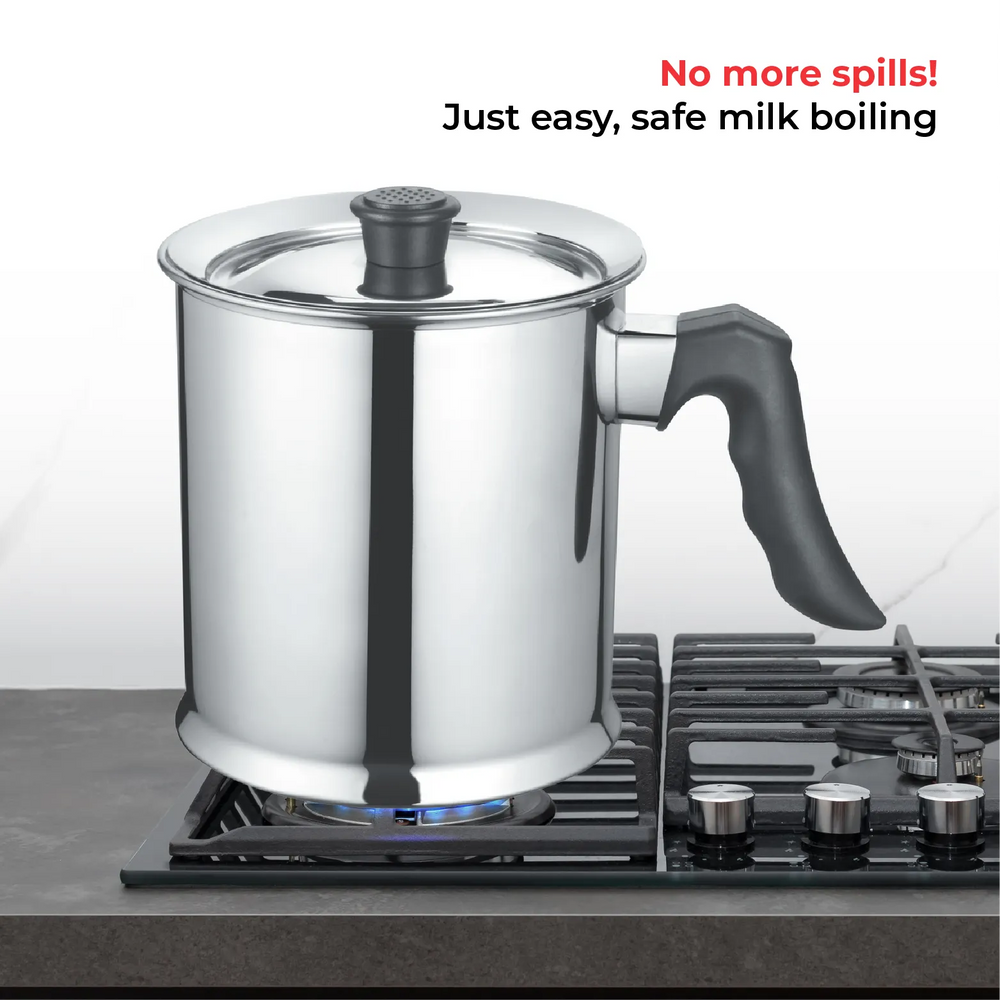
Place the sealed milk boiler on your gas stove or induction cooktop. Use medium heat rather than high heat. High heat causes the outer water to boil too aggressively, which can result in water spilling from the whistle before the milk inside has properly boiled. Medium heat gives the steam transfer mechanism time to work effectively and produces consistent, reliable results.
When the Whistle Sounds
Remove the milk boiler from the heat immediately when the whistle sounds. Use the bakelite handle firmly and move the vessel to a safe, stable surface. Allow it to settle for a moment before opening the lid, as there will be residual steam inside. Open the lid carefully, tilting it away from you to allow any trapped steam to release safely. Your milk is now boiled and ready to pour.
CARING FOR YOUR JVL MILK BOILER
A well-maintained milk boiler performs consistently for years and requires very little effort to keep in excellent condition.
After each use, allow the milk boiler to cool completely before washing. Never immerse a very hot steel vessel in cold water, as the sudden temperature change can stress the material over time. Once cooled, wash the inner vessel with warm water and mild dish soap using a soft sponge. For the outer water chamber, empty any remaining water after each use and rinse thoroughly. Do not leave water sitting in the outer chamber between uses as this can lead to mineral deposits building up on the interior walls over time.
For the whistle assembly, unscrew it from the lid and clean it separately under running water after each use. Milk vapour and mineral deposits from the steam water can build up inside the whistle mechanism over time, affecting its performance. A quick rinse and dry of the whistle assembly after each use prevents this completely.
Dry all components thoroughly before reassembling and storing. The lid, inner vessel, and outer chamber should all be stored dry to prevent any water spots or residual moisture from affecting the steel surface.
Never use steel wool, abrasive scrubbing pads, or harsh chemical cleaners on any component of the milk boiler. A soft cloth or sponge with mild soap is all that is needed for everyday cleaning. For any stubborn milk residue on the inner vessel surface, a soak in warm soapy water for ten minutes will release it without any scrubbing required.
Never place the milk boiler on the flame without milk in the inner vessel and water in the outer chamber. Dry heating damages the base and can compromise the integrity of the vessel walls over time.
MILK BOILER VS ORDINARY SAUCEPAN. WHY THE PURPOSE-BUILT VESSEL WINS
Many households wonder whether a milk boiler is truly necessary when an ordinary saucepan or pot can also heat milk. Here is an honest comparison of the two approaches.
An ordinary saucepan heats milk through direct contact between the flame and the base of the vessel. This creates a rapid and uneven temperature rise in the milk, with the base layer heating significantly faster than the top layer. This uneven heating is what causes milk to develop a skin on the surface, to burn and stick at the base, and to rise and overflow suddenly when the boiling point is reached. An ordinary saucepan also gives you no indication whatsoever of when the milk is approaching boiling point — the only indicator is your own continuous attention.
A milk boiler heats milk indirectly through steam transfer, producing a slower and more even temperature rise across the full volume of milk. This gradual heating reduces skin formation on the surface, reduces burning and sticking at the base, and produces a more consistent quality of boiled milk. And the whistle mechanism means that you do not need to watch the milk at all — the vessel tells you when it is ready.
The time investment required by an ordinary saucepan is daily, compounding, and impossible to eliminate. The time investment required by a JVL milk boiler is one purchase, one learning session for correct usage, and a lifetime of mornings where you do not have to watch the milk boil.
WHY JVL CLASSICWARE FOR YOUR MILK BOILER
JVL Classicware has spent decades building kitchenware that earns its place in Indian households through genuine quality and genuine daily usefulness. Our stainless steel milk boiler range reflects that commitment in a product that addresses one of the most consistently frustrating daily kitchen tasks in the Indian home.
Every JVL milk boiler is built from food-grade stainless steel with a whistle mechanism calibrated for reliable, timely alerts, cool-touch bakelite handles for safe daily handling, a curved pouring edge for spill-free serving, and full compatibility with gas and induction cooking surfaces. The range covers the full capacity spectrum from compact 1 litre options to generous 3 litre vessels, and is available in single-handle and double-handle configurations to suit different household preferences and usage patterns.
When you buy a milk boiler from JVL Classicware, you are making a decision that will change your morning routine from the first day you use it. No more watching. No more overflow. No more stovetop to clean. Just milk, boiled safely and correctly, every single morning, with a whistle that tells you when it is ready.
SHOP THE JVL MILK BOILER COLLECTION
The JVL Single Handle Milk Boiler is available at jvlclassicware.com/products/milk-boiler-single-handle across multiple capacity options. Compact, lightweight, and suited to individual and small household daily use.
The JVL Double Handle Milk Boiler is available at jvlclassicware.com/products/milk-boiler-double-handle across multiple capacity options. Stable, easy to handle, and ideal for larger households and higher-volume daily milk boiling.





 95% customer Satisfaction
 Trusted by 10 lakhs+ families
 40+ Years of Manufacturing Excellence
 Own R&D Lab


