
Posted by Jvl Classicware
on August 19, 2026

There are some things in an Indian kitchen that rarely need an introduction. The masala dabba is one of them.
Open the lid and everything required for everyday cooking is right there—turmeric for dal, cumin for tadka, coriander for sabzi, red chilli for heat, mustard seeds for tempering, and the masalas your family reaches for almost every day.
That simplicity is exactly why the traditional Indian spice box has remained useful through generations.
A good masala dabba does more than hold spices. It keeps everyday ingredients organised, reduces the number of jars you need to open while cooking, and makes it easier to know when your most-used spices need refilling.
But not every masala box is the same.
Material quality, number of compartments, katori size, lid design, ease of cleaning, and overall capacity can make a noticeable difference in everyday use.
If you are looking to replace your old masala ka dabba or buy a better one for a new kitchen, here is what you should know.
What Is a Masala Dabba?
A masala dabba, also known as an Indian spice box, spice tin, masala holder, spice container, or masala box, is a large container that holds several smaller removable bowls called katoris.
These inner compartments allow you to keep different spices together without mixing them.
A traditional design often includes around seven compartments, making the masala dabba with 7 compartments one of the most familiar options in Indian households.
The exact spices kept inside differ from kitchen to kitchen.
One family might keep:
- Turmeric
- Cumin
- Coriander powder
- Red chilli powder
- Mustard seeds
- Garam masala
- Fenugreek seeds
Another may replace a few of these with ajwain, black pepper, chana dal, urad dal, hing, or regional masala blends.
That flexibility is part of what makes the masala dabba so useful.
Why Every Indian Kitchen Benefits From a Masala Dabba
Indian recipes often require several spices at different stages.
Think about preparing a simple dal tadka. You may need cumin, mustard seeds, turmeric, chilli and possibly hing—all within a few minutes.
Without an organised spice box, this can mean opening multiple containers, searching through a shelf and putting everything back after cooking.
A steel masala box brings those everyday ingredients together.
1. Everyday Spices Stay Within Reach
Instead of opening six or seven jars, you open one box.
This is especially helpful for spices used in almost every meal.
2. Cooking Becomes More Efficient
When spices are visible together, you can move from one stage of cooking to the next without repeatedly searching through kitchen cabinets.
3. Your Spice Shelf Stays Organised
A masala box helps separate frequently used spices from bulk refills and occasional ingredients.
4. You Can See What Needs Refilling
Open the box and you immediately know if turmeric is running low or if the cumin katori needs a refill.
5. It Works Across Different Indian Cooking Styles
North Indian, South Indian, Gujarati, Maharashtrian, Bengali or everyday mixed cooking—the compartments can be customised according to your family's food habits.
Why Choose a Stainless Steel Masala Dabba?
When buyers search for the best masala dabba in India, stainless steel is usually one of the first materials they consider.
And for good reason.
A quality masala dabba stainless steel design can offer the durability and practicality needed for an item that may be opened several times every day.
Durable for Daily Cooking
Unlike fragile storage containers, stainless steel is suited to frequent everyday handling.
A well-made spice box can remain part of your kitchen organisation system for years when used and maintained properly.
Easy to Clean
Turmeric and chilli are intensely coloured spices.
Stainless steel surfaces are generally straightforward to wash compared with materials that may stain more easily. Always follow the manufacturer's cleaning instructions.
Food Storage Friendly
When choosing your masala box, look for food-grade materials.
If a manufacturer specifies 304 stainless steel, that can be an additional material-quality point to consider while comparing different products.
Suitable for Indian Kitchens
A stainless steel spice box handles everyday kitchen use well and suits both traditional and contemporary kitchen interiors.
Clean, Timeless Appearance
Whether your kitchen has wooden cabinets, modern modular storage or traditional steel utensils, a stainless steel masala dabba blends in naturally.
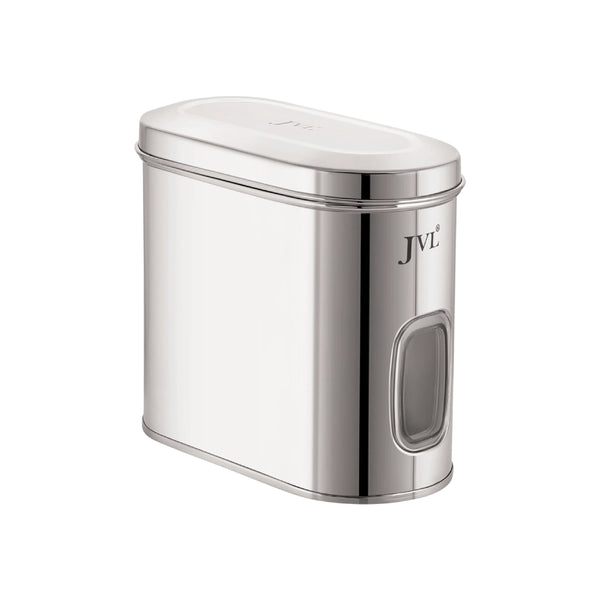
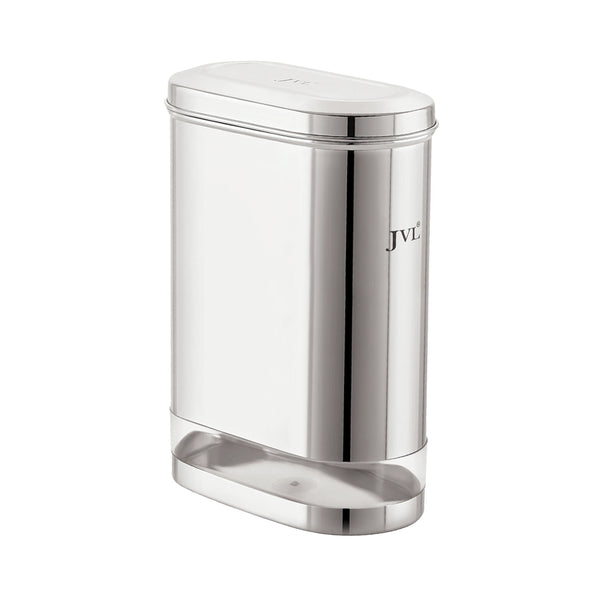
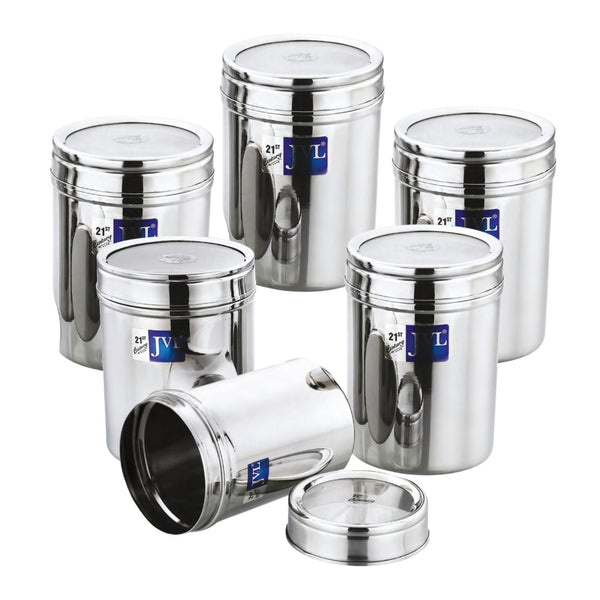
You can explore JVL Classicware's wider canisters and jars collection when planning an organised kitchen storage system.
Why Is a 7-Compartment Masala Dabba So Popular?
Seven compartments provide enough variety for most everyday Indian kitchens without making the spice box unnecessarily large.
A common seven-spice combination could include:
- Turmeric powder
- Cumin seeds
- Coriander powder
- Red chilli powder
- Mustard seeds
- Garam masala
- Fenugreek seeds or another household favourite
The seventh compartment can easily change according to your cooking style.
For example, a South Indian kitchen may prioritise ingredients used for tempering, while another household may dedicate more compartments to powdered masalas.
The point is not to follow a fixed list.
The best masala dabba is the one that contains the spices you actually use every day.
7 Compartments vs 9 Compartments: Which Should You Buy?
More compartments may sound better, but that is not always true.
Choose 7 Compartments If:
- You use a predictable set of everyday spices.
- You want a compact masala box.
- Kitchen storage space is limited.
- You prefer reasonably sized katoris.
- You already keep specialty masalas in separate jars.
Consider More Compartments If:
- You regularly cook multiple regional cuisines.
- Your household uses many whole and powdered spices daily.
- You want more spices inside one box.
- You have enough kitchen space for a larger masala dabba set.
Do not choose solely by compartment count.
A box with seven practical, easy-to-use katoris may be more useful than a larger design with many compartments you rarely touch.
What Size Masala Dabba Is Best?
You may come across 8-inch, 10-inch and other size options when shopping for an Indian masala box.
The best size depends on how your kitchen works.
Consider:
- Number of people in the household
- Frequency of cooking
- Amount of spice used daily
- Kitchen cabinet space
- Countertop space
- Katori capacity
- How often you want to refill the box
If you cook several meals daily for a large family, slightly larger spice compartments may be useful.
For one or two people, a compact masala dabba may be easier to handle and store.
Avoid buying an unnecessarily large spice box simply because it offers more capacity.
Steel Lid or Transparent Lid?
The lid can significantly affect everyday convenience.
Traditional masala dabbas often come with steel lids, while newer designs may feature a transparent lid.
Why Choose a Transparent Lid?
A see-through lid lets you check your spice levels without opening the box.
It can be useful when:
- You want to see which spice needs refilling.
- Multiple people use the same kitchen.
- You prefer quick visual organisation.
- You want a more modern-looking masala holder.
If easy visibility matters to you, the Spice Tin with See-Through Lid is worth exploring as part of your kitchen spice organisation setup.
Why Choose a Traditional Steel Lid?
A full stainless steel design has a classic appearance and may appeal to people who prefer traditional kitchenware.
Whichever lid style you choose, check that it fits properly and is convenient to open and close during cooking.
Also remember that a fitted lid and an airtight lid are not necessarily the same thing. If airtight storage is important to you, check whether the product specifically states that feature.
Should You Buy a Masala Dabba With a Spoon?
A masala dabba with spoon can make daily cooking more convenient.
A small utility spoon is useful when measuring powdered spices or whole seeds directly from the katori.
However, good spice hygiene still matters.
To avoid cross-contamination between spices:
- Always use a clean, dry spoon.
- Avoid putting a wet spoon into the masala box.
- Do not move a turmeric-covered spoon directly into another spice.
- Wipe or change the spoon when needed.
- Keep cooking moisture and steam away from open katoris.
Using the right container is only half the job. Good storage habits help keep the spice box clean and organised.
How to Keep Spices Fresh in a Masala Dabba
Even the best spice storage box cannot protect spices if it is stored incorrectly.
Follow these simple habits.
Keep the Box Away From Excessive Heat
Having the masala dabba close to your cooking area is useful, but placing it directly next to intense heat or constant steam is not ideal.
Keep it conveniently nearby in a dry location.
Never Introduce Moisture
Water can cause powdered spices to clump and may reduce storage quality.
Always use dry utensils.
Store Working Quantities
You do not have to fill every katori with several months' worth of masala.
Keep practical quantities for everyday cooking and store your larger refill packs separately.
Close the Lid After Use
Do not leave your Indian spice box open for the entire cooking session.
Take what you need and close the lid.
Clean Before Refilling
When a compartment becomes empty, remove remaining residue and clean it before adding a fresh batch.
Make sure the katori is completely dry before refilling.
Masala Dabba vs Separate Spice Jars
Should you use a masala dabba or individual jars?
For many kitchens, the best system uses both.
Your masala dabba can contain daily-use spices, while separate canisters store reserve quantities and less frequently used ingredients.
For example:
Keep in the Masala Dabba
- Turmeric
- Cumin
- Coriander
- Chilli powder
- Mustard seeds
- Garam masala
- Frequently used whole spices
Keep in Separate Canisters
- Bulk spice refills
- Specialty spice blends
- Dry fruits
- Occasional whole spices
- Dry cooking ingredients
- Extra masala packets
This setup keeps your cooking station uncluttered without forcing every ingredient into one container.
For additional kitchen organisation, the Twister Clear - Mirror Finish can also be considered when building a coordinated canister system for suitable dry ingredients.
How to Choose the Best Masala Dabba in India
Before you buy, check these points:
- Material: Prefer good-quality, food-grade material.
- Steel quality: Check the stainless steel grade where specified.
- Compartments: Choose according to the number of spices you actually use.
- Katori size: Make sure each compartment offers practical capacity.
- Overall size: Confirm that it fits your shelf or countertop.
- Lid: Compare steel, transparent, fitted and airtight options.
- Visibility: Decide whether a see-through lid would make refilling easier.
- Spoon: Check whether utility spoons are included if that matters to you.
- Cleaning: Select a design that can be cleaned easily.
- Finish: Look for smooth edges and neat construction.
- Ease of access: Inner katoris should be convenient to remove and refill.
- Durability: Remember that this is likely to be an everyday-use product.
The right choice should fit your cooking routine rather than simply having the longest feature list.
Why a Masala Dabba Makes a Great Kitchen Gift
A well-made masala dabba set can also make a thoughtful and practical gift.
It works well for:
- Weddings
- Housewarming occasions
- Newly married couples
- People moving into their first home
- Parents setting up a kitchen for their children
- Indian food enthusiasts
- Festive gifting
Unlike decorative items that may sit unused, a spice box can become part of someone's everyday kitchen routine.
Final Thoughts
The masala dabba has remained a part of Indian kitchens for generations because its basic idea is still incredibly useful: keep the spices you reach for every day together.
A well-designed stainless steel masala dabba helps create a more organised cooking routine, reduces the need to open multiple spice jars and keeps essential ingredients easily accessible.
When buying one, do not focus only on appearance.
Think about:
- Material quality
- Number of katoris
- Spice capacity
- Overall size
- Lid design
- Transparent versus steel lid
- Spoon availability
- Cleaning convenience
- Your family's actual cooking habits
For many households, a seven-compartment design offers an excellent balance between organisation and simplicity.
Your spice box does not need to hold every masala you own.
It simply needs to keep the spices you use most often ready when the tadka starts sizzling.
Explore the complete JVL Classicware canisters and jars collection to organise your everyday spices and dry kitchen essentials with a storage system that fits naturally into your cooking routine.
FAQs About Masala Dabba
What is a masala dabba?
A masala dabba is an Indian spice storage box containing several smaller inner compartments or katoris. It keeps frequently used cooking spices together in one convenient container.
Which masala dabba is best?
The best option depends on your cooking habits. Look for food-grade material, durable construction, suitable compartment capacity, a well-fitting lid and a size that fits your kitchen.
Is stainless steel good for storing spices?
Stainless steel is widely preferred for spice storage because of its durability, ease of cleaning and suitability for regular kitchen use. Check the manufacturer's food-grade specifications when buying.
How many compartments should a masala dabba have?
Seven compartments are common and sufficient for many Indian households. Nine or more compartments may suit people who use a broader range of spices daily.
What spices should I keep in my masala dabba?
Popular choices include turmeric, cumin, coriander, red chilli, mustard seeds, fenugreek and garam masala. The exact selection should reflect what your family cooks most often.
Is a transparent lid better for a masala dabba?
A transparent lid can make it easier to see spice levels and identify when a katori needs refilling. A traditional steel lid may appeal more if you prefer a classic design.
Should a masala dabba be airtight?
A tight-fitting lid is useful, but not every masala box is completely airtight. Check the product specifications if airtight storage is a priority.
Can I wash a stainless steel masala dabba?
Generally, stainless steel kitchenware can be cleaned easily, but always follow the specific manufacturer's instructions. Make sure the box and katoris are completely dry before putting spices back inside.