
Posted by Jvl Classicware
on July 18, 2026

There is a particular kind of confidence that comes from knowing your kitchen tools will not let you down. It shows up when you are tempering mustard seeds in hot oil, ladling dal at the exact right consistency, or grating coconut for a Sunday chutney without the grater buckling under pressure. Indian cooking asks a lot from its tools. High heat, acidic gravies, daily scrubbing, and constant handling wear down anything that is not built properly. This is exactly why stainless steel kitchen tools have quietly become the backbone of Indian kitchens, trusted by home cooks who have learned through experience what actually lasts.
If you walk into the kitchen of someone who has been cooking for decades, you will rarely find flimsy plastic gadgets or coated tools that have started peeling. What you will find instead is steel. Ladles that have been passed down. Strainers that still hold their shape. Choppers and graters that work exactly as well as they did on day one. That kind of reliability is not an accident. It comes from understanding what makes stainless steel kitchen tools different from every other material on the market.
Why Indian Kitchens Keep Coming Back to Stainless Steel
There is a reason stainless steel kitchen tools are the first recommendation in nearly every serious cooking guide, and it has little to do with trend or aesthetics. It comes down to how Indian food is actually cooked. Tempering, deep frying, slow simmering, and steaming all involve extremes of heat and moisture that many other materials simply cannot handle without degrading.
Non-stick tools scratch and lose their coating within months of regular use. Aluminium reacts with acidic ingredients like tomatoes, tamarind, and citrus, altering both taste and safety. Plastic tools warp under heat and absorb odours that never fully wash away. Stainless steel avoids all three problems. It does not react with acidic gravies, it holds its shape under sustained heat, and it does not carry flavours from one dish into the next. This is why food-grade stainless steel kitchen tools remain the standard that other materials are measured against, not the other way around.
The 304 Grade Standard That Actually Matters
Not all stainless steel is created equal, and this is where a lot of home cooks get caught out by tools that look identical on a shelf but perform very differently in daily use. The grade of steel used in a kitchen tool determines everything from rust resistance to how safe it is for direct food contact.
304 grade stainless steel, sometimes labelled 18-8, is widely regarded as the gold standard for kitchen tools because of its high chromium and nickel content. This composition is what gives the steel its resistance to corrosion, even after years of contact with salt, acid, and moisture. When a product page or brand does not specify the grade, it is worth asking, because lower grades of steel tend to develop rust spots, pitting, or a dull, tired finish far sooner than 304 grade steel does. A well-made stainless steel tool should feel heavy for its size, hold a clean shine after washing, and show no signs of discolouration even after months of daily cooking.
Tools That Actually Handle Indian Cooking Techniques
Indian cooking is not gentle on kitchen equipment. A single meal might involve deep frying pooris, tempering spices in smoking hot oil, pressure cooking dal, and steaming idlis, sometimes all within the same hour. Tools need to move between these techniques without losing their edge, their grip, or their shape.
This is where the right stainless steel kitchen tools for home use start to earn their place on the counter rather than in the back of a drawer. A sturdy ladle needs to withstand direct contact with boiling oil without warping. A strainer needs mesh fine enough to catch small particles yet strong enough not to bend under the weight of hot liquid. A good grater needs blades sharp enough to shred coconut or vegetables cleanly without slipping. When these tools are made from proper stainless steel, they perform consistently across every cooking method an Indian kitchen demands, rather than being suited to only one.
Comfort in the Hand Changes Everything
It is easy to focus entirely on the blade or the bowl of a tool and forget that comfort plays just as large a role in daily cooking. A tool that is difficult to grip becomes a tool that gets used less, even if it performs beautifully. This matters enormously for anyone spending an hour or more in the kitchen every single day.
Ergonomic handles that sit naturally in the palm reduce fatigue during repetitive tasks like stirring, whisking, or chopping. A textured or contoured grip prevents slipping when hands are wet or oily, which happens constantly during Indian cooking. The best stainless steel cooking tools are designed with this in mind, balancing the weight of the head and handle so the tool feels stable rather than top heavy. This is a detail that rarely gets mentioned in casual conversations about kitchenware, yet it is often the difference between a tool that gets reached for daily and one that sits unused.
Small Accessories That Make a Big Difference
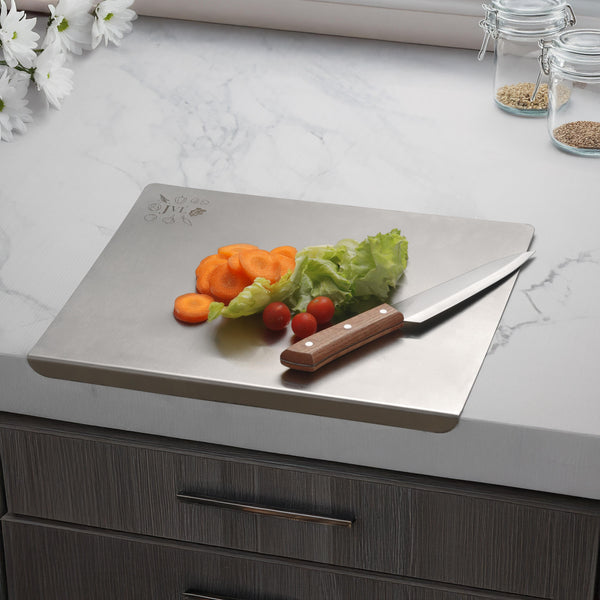
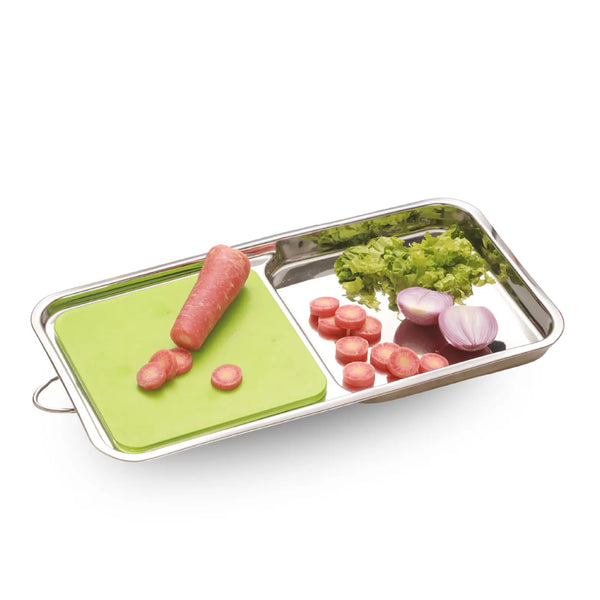
Beyond the obvious ladles and spatulas, there is an entire category of steel kitchen equipment that quietly makes daily cooking faster and less frustrating. Chopping vegetables is one of the most repetitive tasks in any Indian kitchen, and having the right tool for it saves genuine time every single day. The Rectangular Vegetable Chopper is built with this exact need in mind, offering a compact design with a food-grade blade that handles everything from onions to leafy greens without the mess of a cutting board. Its space-saving hook design means it can hang neatly rather than taking up counter space, which matters in kitchens where every inch of surface is already spoken for.
Serving tools deserve the same attention as cooking tools, since they get just as much daily use. A double-walled cup with a matching coaster, like the Cup with Coaster ( Double Walled ), keeps beverages at the right temperature while protecting furniture from heat marks and spills, something that becomes especially useful when serving chai to guests throughout the day. These smaller accessories rarely get the spotlight, but they are often the tools that get picked up the most in an average day of cooking and serving.
Rust Resistance Is Not Optional
Few things are more disappointing than pulling out a favourite kitchen tool only to find rust spots forming along the edges. This is one of the most common complaints with lower quality steel or coated alternatives, and it is entirely avoidable with the right material choice.
Rust forms when steel with insufficient chromium content is exposed to moisture over time. Proper food-grade stainless steel kitchen tools are formulated specifically to resist this, holding their finish even after repeated exposure to water, steam, and acidic ingredients. This resistance is not just about appearance either. Rust on a cooking surface can affect food safety and the taste of what is being cooked, which is a serious concern for anyone preparing meals for their family every day. Choosing tools with genuine rust resistance means one less thing to worry about in an already busy kitchen routine.
Induction Compatibility for Modern Kitchens
As more Indian kitchens shift toward induction cooktops, compatibility has become a genuine consideration rather than an afterthought. Not every stainless steel tool works well on induction, and this is a detail worth checking before making a purchase, particularly for tools that come into direct contact with the cooking surface.
Induction compatible stainless steel tools are constructed with a magnetic base layer that allows them to heat evenly and respond quickly to temperature changes on an induction surface. This matters for tasks like tempering, where a delay of even a few seconds can mean burnt spices instead of perfectly bloomed ones. Home cooks who have already made the switch to induction know how frustrating it is to discover that a beloved tool simply will not work on their new cooktop, so checking for this compatibility upfront saves both money and disappointment.
Cleaning and Maintenance That Actually Fits Real Life
No matter how well a tool is made, it needs to survive daily washing without losing its finish or function. This is another area where stainless steel consistently outperforms alternatives, since it does not absorb odours, does not stain easily, and does not require special detergents or careful handling.
Most stainless steel kitchen tools are dishwasher safe, though tools with sharp blades benefit from a quick hand wash to preserve their edge over time. A light rinse immediately after use prevents food residue from drying onto the surface, which makes the next wash faster and easier. For tools with etched or moulded measurement markings, steel holds up particularly well since these markings do not fade or wear away the way printed labels do on plastic tools. This kind of low maintenance is exactly what busy households need, where there is rarely time for elaborate cleaning routines between meals.
Building a Toolkit That Actually Lasts
The most experienced home cooks rarely buy kitchen tools all at once. Instead, they build a toolkit gradually, replacing items that fail with ones made from genuine stainless steel, until eventually almost everything in daily rotation is steel. This gradual shift is not about following a trend. It happens because steel tools simply outlast everything else, season after season, without needing to be replaced.
For anyone looking to build or upgrade their own collection, browsing a dedicated range of Kitchen Accessories makes it easier to see the full spectrum of what is available, from choppers and graters to serving pieces and storage tools. Choosing pieces from a single trusted range also tends to mean more consistent quality across the board, since the steel grade, finish, and construction standards remain the same from one tool to the next.
A Kitchen That Works as Hard as You Do
Cooking every day for a family is demanding work, and the tools in your hands should make that work easier rather than adding to the frustration. Stainless steel kitchen tools earn their place in Indian kitchens because they hold up to real, repeated use, resist the wear that ruins cheaper alternatives, and stay safe for food contact meal after meal. Once a kitchen is stocked with genuinely well-made steel tools, the difference is immediately noticeable, in how smoothly tasks move along and how rarely anything needs replacing. That quiet reliability is exactly what serious home cooks have learned to look for, and exactly what keeps them coming back to stainless steel.
Common Questions About Stainless Steel Kitchen Tools
Is stainless steel really better than non-stick for everyday Indian cooking?
For daily, high-heat Indian cooking, yes. Non-stick coatings wear down with repeated use of metal ladles and high flame, while stainless steel holds up to acidic gravies, tempering, and deep frying without losing its surface or leaching into food over time.
What grade of stainless steel should I look for in kitchen tools?
304 grade, also called 18-8, is considered the best choice for food contact. It resists rust and corrosion far better than lower grades and keeps its finish even after years of daily washing.
Are stainless steel kitchen tools safe for induction cooktops?
Only tools with a magnetic base layer work properly on induction. It is worth checking this specifically before buying, since not every stainless steel tool is built with induction compatibility.
Can stainless steel tools go in the dishwasher?
Most can, though tools with sharp blades or fine edges tend to last longer with a quick hand wash, which helps preserve their sharpness and finish over time.
Why do some stainless steel tools develop rust while others do not?
Rust usually points to a lower grade of steel with insufficient chromium content. Genuine food-grade stainless steel resists rust even after prolonged exposure to water, steam, and acidic ingredients.