
Posted by Jvl Classicware
on July 24, 2026

Open any Indian kitchen cabinet and you'll find the same story playing out. A plastic dabba with a lid that no longer clicks shut. Atta that's gone slightly damp because monsoon humidity found its way in anyway. A container that smells faintly of the turmeric it held three refills ago, no matter how many times it's been washed. None of this is really about you being careless with your kitchen. It's about the container doing a job it was never built to do properly.
Storage containers steel have quietly become the fix Indian households are switching to, and it's not a trend — it's a correction. For decades, plastic was the default simply because it was cheap and light. But dry ration, spices, and daily-use staples deserve something that actually protects them, not something that just holds them until the next problem shows up.
Why Plastic and Glass Keep Letting Your Kitchen Down
Plastic containers stain. They absorb the smell of strong spices like hing and haldi and never quite let it go. Over time, the lids warp slightly from heat near the stove, and that "airtight" seal you paid for stops being airtight at all. Moisture creeps in, and so do weevils and pantry moths — especially during humid months when Indian kitchens are most vulnerable to spoilage.
Glass solves the smell and staining problem, but it brings its own risk. It's heavy, it chips at the edges, and one wrong knock against the counter turns your rice storage into a cleanup job. For a kitchen that's used multiple times a day, every day, that's not a small inconvenience.
This is exactly where steel storage containers for Indian kitchen use start making more sense. Steel doesn't stain, doesn't hold odour, doesn't crack, and doesn't warp under heat. It's the one material that was built to survive daily kitchen chaos rather than just tolerate it.
What Makes Steel the Material Indian Kitchens Actually Need
Food safety experts and kitchen organisers consistently point to the same reasoning when comparing storage materials for Indian households: steel resists humidity, doesn't absorb odour, and keeps pests out far more reliably than plastic. That's not a small detail in a country where kitchens deal with heavy monsoons, high humidity for months at a stretch, and pantry staples that need to stay fresh for weeks, not days.
Here's what food-grade stainless steel actually brings to your daily storage:
- Rust-resistant build — Even with regular use, washing, and exposure to moisture, quality steel containers don't corrode or develop those ugly brown spots you get on lower-grade metal.
- Airtight seal — A proper seal keeps out moisture and air both, which is the single biggest factor in how long your dry staples actually last on the shelf.
- No odour absorption — Store your masalas one week and your dry fruits the next, without one flavour bleeding into the other.
- Food-grade safety — Steel doesn't leach chemicals into food the way lower-quality plastic can over time and repeated use.
- Long-term dry food storage — Because it creates a real moisture barrier, steel keeps rice, dals, flours, and spices fresher for longer stretches without needing to be transferred or re-sealed constantly.
None of this is marketing language. It's simply what the material does differently, and it's why steel has moved from "premium option" to the sensible default for households that are tired of replacing containers every year.
Five Things to Check Before You Buy Steel Storage Containers
Not every steel container on the market is built the same way, and the difference usually shows up six months after purchase, not on day one. Before you buy, it's worth checking for these:
- Seal quality first, everything else second. A container is only as good as its lid. Look for a seal that clicks or locks firmly, not one that just rests on top.
- 304-grade steel where possible. This is the same grade used in food-processing equipment. It's the benchmark for something that's genuinely food-grade steel, not just steel-coloured.
- Wide-mouth openings. A narrow opening looks neat but makes daily scooping — especially with wet spoons — a genuine hassle.
- Stackable design. Indian kitchens are rarely short on staples, but they're almost always short on shelf space. Containers that stack cleanly save real cabinet room.
- Capacity that matches your household. A single container size never works for a family that cooks rice daily and also stores spices in small quantities. Range matters as much as material.
How JVL Built Steel Containers for the Way Indian Kitchens Actually Work
This is where most storage container ranges stop at "steel" and call it a day. JVL went a step further and designed each piece around how Indian kitchens are actually used — daily, heavily, and with very little patience for containers that don't earn their shelf space.
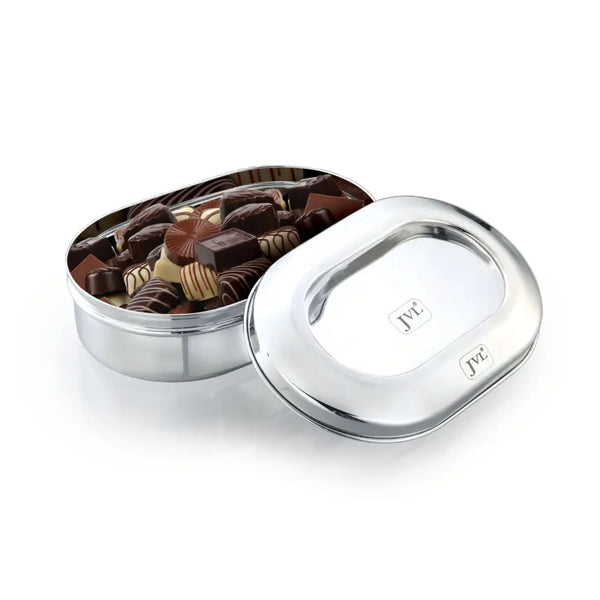
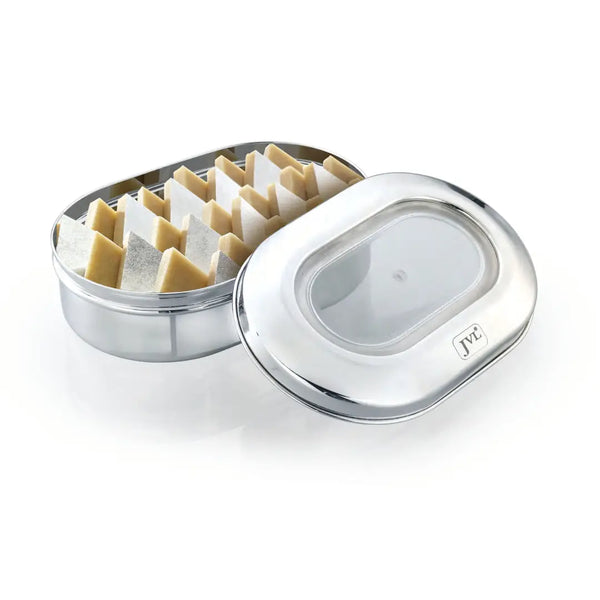
The Store Tin with Curved Belly shape is a good example of that thinking. The curved body isn't just a design choice — it makes the container easier to grip and pour from with one hand, which matters when you're mid-recipe and your other hand is holding a hot pan. It's built with an airtight lid that actually holds its seal use after use, so your atta, rice, or dal stays as fresh on day twenty as it was on day one.
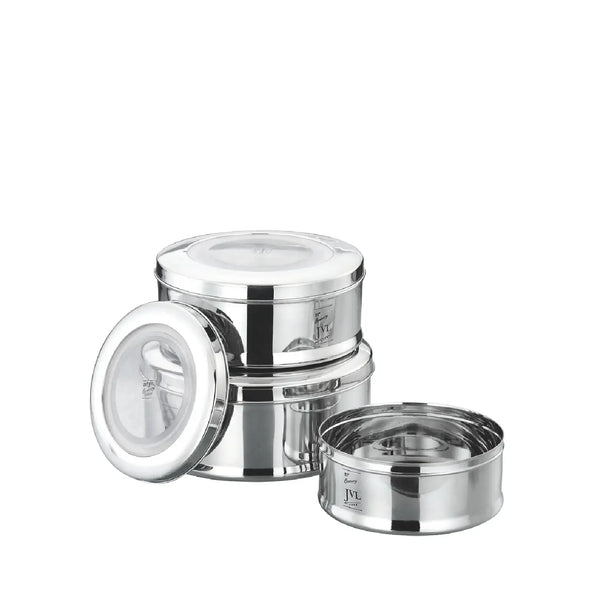
For households that store smaller staples — spices, dry snacks, tea leaves — the Tab Tin is built around the same stackable, rust-resistant logic, but in a form that fits neatly into tighter cabinet spaces. The tab-style lid gives you a secure close without wrestling with a stiff seal every single time.
Both are part of JVL's broader steel storage solutions range, which is built around one simple idea: a container should protect what's inside it and stay out of your way while doing it.
The Real Test: Does It Still Work Perfectly a Year Later?
This is the question that actually separates good steel storage from average steel storage. Cheap steel containers can still rust at the seams, especially near the lid joints where moisture collects. Poorly designed seals loosen with repeated opening and closing. A well-built stainless steel container, on the other hand, should look and perform almost identically after a year of daily use — no rust rings, no loose lid, no lingering smell from last month's achaar.
That's the standard JVL builds to, because a storage container that needs replacing every year isn't really saving you anything — it's just delaying the same plastic-container problem in a shinier package.
Frequently Asked Questions
Is stainless steel actually better than plastic for storing spices and grains? Yes, for one main reason — steel doesn't absorb odour or moisture, while plastic does over time. This means your spices stay true to their flavour and your grains stay dry for longer, especially during humid months.
What grade of steel should I look for in a storage container?
304-grade stainless steel is considered the safest and most durable option for food storage. It's rust-resistant, doesn't react with food, and holds up well under repeated daily use.
Will steel containers rust if I store slightly moist ingredients?
Good-quality food-grade steel, like 304-grade, is built specifically to resist rust even with regular exposure to moisture. Lower-grade steel is where rusting tends to become a problem.
Are steel storage containers heavier than plastic ones?
They're a little heavier than plastic, but noticeably lighter than glass. Most Indian households find the trade-off worth it, given how much longer steel containers last.
Can steel containers really keep food fresh for weeks?
When the lid creates a genuine airtight seal, yes. The seal is what blocks out air and moisture, and that's the actual factor that extends shelf life — not the material alone.
Do stackable steel containers actually save cabinet space?
Significantly. A stackable design lets you use vertical space instead of spreading containers across a shelf, which matters most in compact Indian kitchen layouts.
Your kitchen staples deserve better than a container that gives up after a few months. Explore JVL's full range of steel storage boxes for kitchen and switch to storage that's actually built for how Indian kitchens really work.