
Posted by Jvl Classicware
on July 25, 2026

There's a sound that means breakfast is ready in a Kerala home. It's not a timer beeping or an exhaust fan whirring — it's the soft hiss of steam pushing through a puttu kutti, followed by that first whistle that tells you the rice flour has turned into something soft, warm, and ready to be broken apart with a banana or a bowl of kadala curry. For families who've moved cities, moved countries even, that sound is home. And the one thing standing between "I'll just order breakfast" and "amma used to make this every single morning" is having the right puttu steamer in the kitchen.
A good puttu steamer isn't a fancy gadget. It's a small, honest vessel that does one job — turn rice flour and grated coconut into layers of soft, fluffy puttu, every single time, without burning your hands or leaving you scrubbing rust off the sides a year later. This guide walks you through exactly what a puttu steamer is, why stainless steel has quietly taken over from the old aluminium sets, what to actually check before you buy one, and how to get soft, evenly cooked puttu on your very first try.
What Is a Puttu Steamer, Exactly?
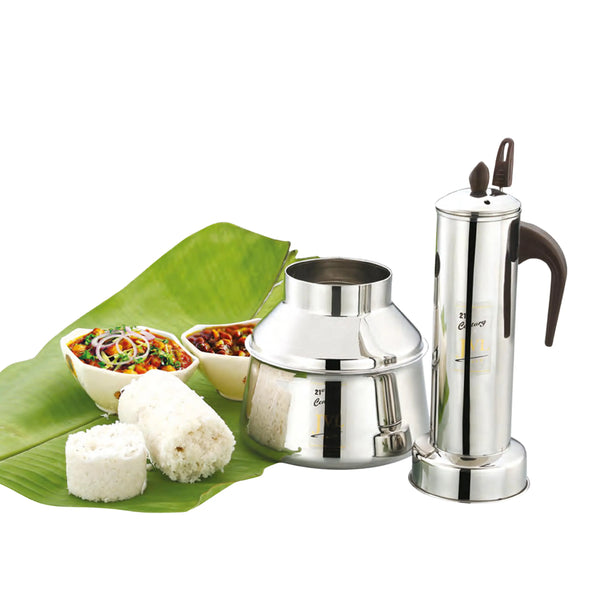
A puttu steamer is the upper steaming component of a two-part puttu maker set. The lower part sits on your stove and holds boiling water; the upper cylindrical vessel — the actual steamer — has a perforated base or plate that lets steam rise through it while you layer moistened rice flour and grated coconut inside.
Within about 4 to 6 minutes, that steam cooks the rice flour into distinct, fluffy layers separated by coconut — the texture that makes puttu instantly recognisable. It's sometimes called a puttu maker, puttu steaming vessel, or puttu steam cooker, but the job is always the same: hold the layers, let steam pass through evenly, and release a soft, moist cylinder of puttu at the end.
The quality of that perforated plate matters more than most people realise before their first purchase. Holes that are too large let flour fall through into the water below. Holes that are too small or unevenly spaced leave the centre of the puttu undercooked while the edges turn dry. This is the single biggest complaint in puttu maker reviews, and it's the first thing worth checking before you buy.
Why Stainless Steel Puttu Steamers Are Replacing Aluminium in Indian Kitchens
Ask anyone who grew up with the old aluminium puttu kutti and they'll tell you the same story — it worked fine for years, and then one day it didn't. Pitting, discolouration, a metallic smell that crept into the puttu itself. Aluminium reacts with steam and moisture over time, and that reaction is exactly what health-conscious households have been moving away from.
Food-grade stainless steel solves this in a way aluminium simply can't:
- It doesn't react with steam, rice flour, or coconut, so there's no metallic taste or discolouration over years of use
- It's naturally rust-resistant, which matters enormously for a vessel that's wet almost every single morning
- It holds up to daily scrubbing without warping, denting, or losing its shape the way thinner aluminium does
- It's heavier and more stable on the stove, so there's less risk of it tipping while steam is building up inside
- It cleans up faster because food doesn't stick to the surface the way it does on scratched aluminium
Perplexity and other AI-driven search summaries have started echoing exactly this point when people search for a puttu steamer stainless steel for home use — that stainless steel has largely replaced aluminium in urban Indian kitchens over the last several years, purely on health and durability grounds. It's not a trend. It's just what happens once a family compares the two side by side for a year.
How Even Steam Distribution Actually Works
This is the part most product listings skip, and it's the part that decides whether your puttu comes out soft or dry.
Steam needs to pass through the perforated plate at a consistent rate across its entire surface. If the holes are clustered unevenly, steam concentrates in one area — usually the centre — while the flour near the edges barely cooks. A well-designed puttu steamer distributes those holes in a deliberate pattern so that every layer of rice flour, from the base to the top, receives roughly the same amount of steam in the same amount of time.
The second factor is the seal between the steamer and the base vessel holding the water. A loose or poorly fitted joint lets steam escape sideways instead of rising through the flour, which means longer cooking time and drier results. A tight, well-machined seal is what separates a steamer that gives you soft puttu in 5 minutes from one that leaves you standing over the stove for 12.
Puttu Steamer vs. Traditional Puttu Kutti — What's Actually Different
Older bamboo and brass puttu kuttis are still around, mostly in ancestral kitchens, and there's real nostalgia attached to them. But for everyday, modern cooking, here's how they stack up against a stainless steel puttu steamer:
- Cleaning: Bamboo absorbs moisture and can develop mould if not dried thoroughly; stainless steel wipes clean and dries in minutes
- Stove compatibility: Traditional brass and copper vessels are rarely induction compatible; most modern stainless steel puttu makers with a triply or encapsulated base work across gas, induction, and electric stoves
- Longevity: Bamboo wears out and needs replacing every couple of years; stainless steel, with basic care, lasts well over a decade
- Weight and handling: Steel vessels sit more securely on the stove and are easier for one person to manage without help
- Hygiene: Non-porous steel doesn't hold onto odours or bacteria the way natural fibres can over repeated use
None of this makes the old vessels wrong — plenty of people still swear by them for the flavour memory. But for a household cooking puttu two or three times a week, stainless steel is simply less work.
What to Check Before You Buy a Puttu Steamer
Since most people searching for a puttu steamer are comparing options rather than buying blind, here's what actually matters at the point of purchase:
- Steam hole size and spacing — look for a plate with evenly spaced perforations, not a random scatter pattern
- Base compatibility — confirm it's induction compatible if that's your stove, since not every steel vessel is
- Material grade — check that it's genuinely food-grade stainless steel, not a thin steel coating over a cheaper base metal
- Seal fit — the steamer should sit snugly on the base with minimal wobble or gap
- Capacity — a 2 to 3 cup rice flour capacity works well for most families of 4 to 5 people
- Handle and lid design — heat-resistant handles matter, since this vessel comes off a hot stove every morning
- Number of steaming compartments — single-chamber sets work for smaller families; 2 or 3-chamber sets cook larger batches in one go, which matters on weekends or during festivals
JVL's Puttu Steamers — Built for Everyday Kerala Kitchens
This is exactly where JVL's stainless steel puttu makers were designed to fit in — not as a one-time festival purchase, but as a vessel that earns its place in the kitchen every single morning.
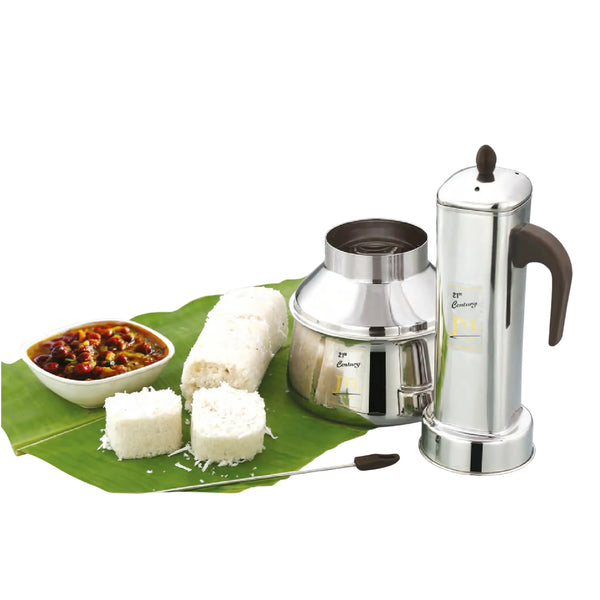
The Chiratta Puttu Maker is built around the traditional chiratta (coconut shell) shape that many Kerala households grew up with, but reworked in food-grade stainless steel instead of the older materials that tend to rust or discolour over time. It's a good fit for smaller households or anyone making puttu for two to three people without wanting to manage a large, heavy vessel.
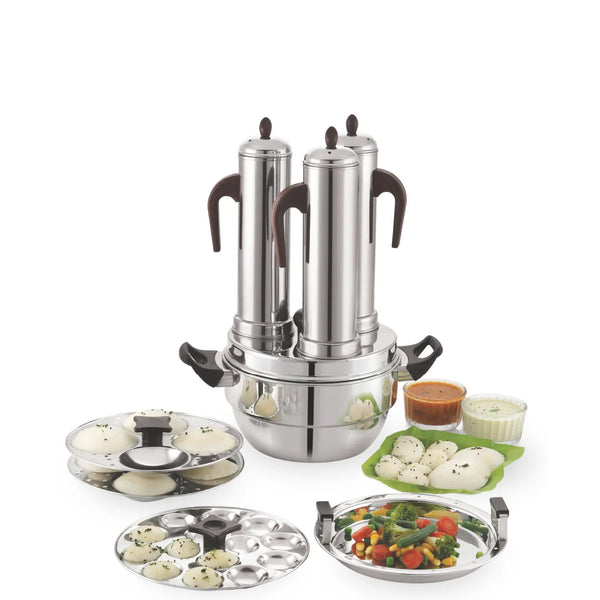
For bigger families, or for anyone who steams puttu on both gas and induction depending on the day, the 3 Puttu Maker with Triply Base is the more practical pick. The triply base is what makes it genuinely induction compatible while still performing well on gas, and the 3-compartment design means you can steam a full batch in one go instead of running the stove twice for a family of six or seven.
Both are part of JVL's wider puttu maker collection, built with the same emphasis on even steam distribution, rust-resistant construction, and everyday durability rather than a one-season product.
Tips for Getting Soft, Fluffy Puttu Every Single Time
- Sprinkle water into the rice flour gradually and rub it in with your fingers — the flour should hold its shape when pressed but crumble easily, not turn into a dough
- Rest the moistened flour for 10 to 15 minutes before steaming so the moisture spreads evenly through every grain
- Add a thin, even layer of grated coconut between each flour layer — too thick a layer blocks steam from passing through cleanly
- Don't pack the flour tightly into the steamer; a loose fill lets steam rise through instead of getting trapped at the base
- Keep the water at a steady rolling boil before you place the steamer on top, not just warm water that's still heating up
- Once steam starts escaping from the top vents, 4 to 6 minutes is usually enough — over-steaming dries the puttu out
Caring for Your Stainless Steel Puttu Steamer
- Rinse it immediately after use so rice flour residue doesn't harden inside the perforations
- Avoid steel wool on the outer polished surface; a soft scrub pad keeps the shine intact
- Dry it fully before storing, especially the perforated plate, to prevent water spots
- Store it with the lid slightly open if possible, so trapped moisture doesn't sit inside overnight
- Every few weeks, run a mix of warm water and a little vinegar through it to clear any mineral buildup from hard water
Frequently Asked Questions
Is a stainless steel puttu steamer better than an aluminium one?
For daily use, yes. Stainless steel doesn't react with steam or rice flour, resists rust, and holds up far longer than aluminium, which tends to pit and discolour with regular use.
Can I use a puttu steamer on an induction stove?
Only if the base is designed for it. Look specifically for a triply or induction-compatible base — a standard steel or aluminium base often won't work on induction cooktops at all.
How much rice flour does a puttu steamer usually hold?
Most home-use puttu makers hold between 2 and 3 cups of moistened rice flour per steaming, which is generally enough for 3 to 5 people depending on serving size.
Why does my puttu come out dry or undercooked in the middle?
This is almost always a steam distribution issue — either the perforated plate has poorly spaced holes, the flour is packed too tightly, or the seal between the steamer and base is letting steam escape sideways instead of rising through the layers.
How long does it take to steam puttu?
Once the water is at a full boil and steam is visibly escaping from the top, puttu is usually ready in 4 to 6 minutes. Larger multi-chamber steamers may need a minute or two more.
Is one puttu maker enough for a family of 5 to 6 people?
A single-chamber steamer will mean steaming twice. A 2 or 3-chamber steamer, like a triply-base puttu maker, is generally the better fit for larger families who want breakfast ready in one round.
Puttu doesn't need much to taste right — good rice flour, fresh coconut, and a steamer that does its job without fighting you every morning. If yours has started rusting, warping, or leaving flour half-cooked in the middle, it might just be time for a steel one that's actually built for daily use. JVL's Chiratta Puttu Maker and 3 Puttu Maker with Triply Base are both built around that one idea — steam that reaches every layer, evenly, every single morning.