
Posted by Jvl Classicware
on May 27, 2026

Open any spice drawer or masala shelf in an Indian kitchen and you will likely find the same quiet chaos. Small plastic packets that have been rolled and clipped but never fully sealed. Mismatched containers of different heights and widths that do not stack or line up neatly. Old tins without lids sitting next to sealed jars with illegible handwritten labels faded by steam and oil. Spices that were purchased months ago and have long since lost their fragrance because they were stored in the wrong container in a warm, humid kitchen environment. And somewhere in the middle of all of it, a cook who knows exactly where everything is but still wastes a minute every cooking session searching for the right masala at the right moment.
This is not a minor organisational inconvenience. The freshness of spices directly affects the flavour of every dish made with them. Turmeric, coriander, cumin, garam masala, red chilli, amchur, jeera powder, and the dozens of other masalas that define Indian cooking begin losing their essential oils and volatile flavour compounds from the moment they are exposed to air, moisture, and heat. Spices stored in improperly sealed containers in a warm kitchen lose meaningful flavour within weeks. Spices stored in airtight, moisture-proof tins in a cool, organised kitchen retain their character for months.
The right set of spice storage tins is the simplest, most impactful upgrade available for the flavour of Indian cooking and the organisation of the Indian kitchen. This guide covers everything you need to know about choosing and using the right spice storage tins for your specific kitchen, why material and lid quality matter for spice freshness, and how a well-organised masala storage system changes the daily cooking experience in ways that go well beyond aesthetics.
Why Spice Storage Is the Most Important Organisation Task in the Indian Kitchen
The Indian kitchen is unlike any other cooking environment in the world in terms of the sheer variety and volume of spices and masalas used on a daily basis. A standard Indian household kitchen regularly uses twenty to thirty distinct spices and masalas across its everyday cooking. Whole spices for tempering. Ground masalas for gravies. Specialised regional blends for specific dishes. Fresh dried herbs. Finishing spices added at the end of cooking. This breadth of daily spice use is what makes the Indian kitchen the most flavour-rich cooking environment in the world and also what makes organised spice storage more important here than in any other culinary tradition.
The Flavour Argument for Proper Spice Storage
Spices contain volatile essential oils that are responsible for their characteristic flavour and aroma. These oils begin evaporating the moment the spice is ground or exposed to open air. The rate of evaporation accelerates with heat, moisture, and light exposure. A ground spice stored in an improperly sealed container in a warm Indian kitchen can lose a significant proportion of its aromatic potency within two to four weeks.
This flavour loss does not announce itself dramatically. The spice still looks the same. It still smells of something. But the depth, the sharpness, and the complexity of the flavour it contributes to a dish are measurably diminished. A curry made with fresh, properly stored coriander powder tastes different from the same curry made with coriander powder that has been sitting in an open packet for six weeks in a warm kitchen. The right spice storage tins, with airtight lids that seal each container properly after every use, slow this flavour loss significantly and extend the effective freshness life of every spice in the collection.
The Organisation Argument
Beyond flavour preservation, organised spice storage directly affects the speed and enjoyment of daily cooking. A masala collection that is stored in identical, uniformly sized tins with clear labels is a collection that can be navigated in seconds during a busy cooking session. Reaching into a well-organised spice shelf and immediately finding the right tin is a small but repeated pleasure that accumulates into a meaningfully more enjoyable daily cooking experience over months and years of use.
A disorganised spice collection is a small but constant source of friction in the kitchen. Every time you need to search through mismatched containers of different heights and widths, read faded or unclear labels, find that the container you need is almost empty and has not been refilled, or open a container that turns out to contain something completely different from what the label says, that friction adds a small increment of frustration to the cooking experience. Multiply that increment by the number of cooking sessions in a year and the cumulative impact on the joy of cooking is significant.
What to Look for When Buying Spice Storage Tins
Airtight Lid Quality
The lid is the most functionally important component of a spice storage tin. An airtight lid that seals completely after every use is what preserves the essential oils in the spice, prevents moisture from entering the tin in a humid kitchen environment, and keeps the spice fresh and aromatic for as long as possible. A lid that fits loosely or that has lost its seal integrity over time allows air to cycle through the container continuously, which accelerates the flavour degradation of the stored spice at almost the same rate as an open container.
When evaluating spice storage tins, the lid quality is the first thing to assess. A well-made spice tin lid should fit firmly over the container mouth with an audible or tactile click that confirms the seal is fully engaged. The seal material, whether rubber, silicone, or a precision-fitted metal-on-metal contact, should maintain its integrity through hundreds of open-and-close cycles over years of daily use.
Material Quality and Food Safety
Food-grade stainless steel is the best material for spice storage tins for the same reasons it is the best material for all food contact vessels in the Indian kitchen. It is completely non-reactive with spice oils and aromatic compounds, does not absorb the strong fragrances of individual spices into its surface, does not rust from the moisture that inevitably reaches the exterior of kitchen containers, and does not stain from turmeric, red chilli, or any other strongly coloured spice.
The non-reactive quality of stainless steel is particularly important for spice storage because many spices, particularly acidic ones like amchur and tamarind powder, can interact mildly with reactive materials over extended storage periods. Stainless steel prevents this interaction entirely.
Stainless steel spice storage tins also do not absorb the distinctive aromas of individual spices into their surface over time. A plastic spice container that has stored cardamom for six months carries the cardamom fragrance in its walls regardless of what it subsequently stores. A stainless steel tin returns to a completely neutral state after cleaning and can be used for any spice without any cross-fragrance contamination.
Uniform Sizing for Organised Storage
One of the most overlooked practical qualities of a good spice storage tin set is uniform sizing across all tins in the set. When every tin in the masala collection is the same height and diameter, they stack neatly, line up cleanly on a shelf, and fit uniformly in a drawer, spice rack, or cabinet. This visual uniformity is not purely aesthetic. It also means that any tin can be found quickly by label rather than by shape, which speeds up the navigation of the masala collection during cooking.
Sets that include different sizes for different spice quantities, such as larger tins for frequently used spices like red chilli and coriander powder and smaller tins for less frequently used spices like cloves and star anise, are particularly well-suited for Indian kitchens where the daily consumption rate of different spices varies significantly.
Labelling Compatibility
A spice storage tin set is only as organised as the labelling system applied to it. The best tin sets include either pre-printed labels for common Indian spices, blank adhesive labels that the cook can write on, or a smooth tin surface that is compatible with adhesive labels or chalkboard markers. Clear, durable labelling that identifies the contents of each tin immediately without needing to open it is what transforms a set of identical tins from a decorative purchase into a genuinely functional organisation system.
Stainless Steel Spice Storage Tins vs Plastic and Glass Alternatives
Stainless Steel vs Plastic Spice Containers
Plastic spice containers are the most common format in the Indian market because of their low cost and wide availability. They are also the format with the most significant limitations for long-term spice freshness and kitchen hygiene.
Plastic containers absorb the aromatic compounds from strongly scented spices into their surface material over time. A plastic container that has stored asafoetida (hing) for several months carries that smell permanently regardless of subsequent cleaning. This absorbed fragrance contaminates every spice subsequently stored in the same container. Stainless steel does not absorb any aromatic compound and returns to a completely neutral state after washing.
Plastic containers also stain from turmeric, red chilli, and other strongly coloured spices within weeks of use. These stains cannot be fully removed by washing and create an unhygienic-looking surface that is a constant visual reminder of the container's limitations. Stainless steel surfaces do not stain from any spice under normal use conditions.
Additionally, some plastic containers, particularly lower-grade varieties, can interact with the volatile oils in spices over extended contact periods, potentially affecting both the storage material and the spice stored in it. Food-grade stainless steel has no such interaction under any conditions.
Stainless Steel vs Glass Spice Jars
Glass spice jars have the advantage of transparency, which allows the contents to be seen without opening the container. This can be useful for quick identification when labels are not in place. However, glass spice containers expose stored spices to light, and light exposure is one of the primary accelerators of spice flavour degradation alongside heat and moisture. The most flavour-damaging form of storage for spices is in a clear glass container on a brightly lit shelf, which is unfortunately also one of the most common spice storage setups in Indian kitchens.
Stainless steel spice tins protect stored spices from light exposure completely, which is a meaningful contribution to long-term spice freshness that glass jars cannot provide. They are also significantly more durable than glass, which cannot survive a drop from a kitchen shelf onto a tile floor.
How to Organise Your Indian Masala Collection Using Spice Storage Tins
The Essential Spice List for an Indian Kitchen
A well-organised Indian kitchen masala collection covers approximately twelve to twenty essential spices that are used regularly across everyday cooking. Understanding what these essential spices are helps determine how many tins you need and how to size your spice storage tin set purchase.
The daily essential spices for most Indian kitchens include turmeric powder, red chilli powder, coriander powder, cumin powder, garam masala, amchur (dried mango powder), kitchen king masala or any regional curry blend, salt, black pepper, cumin seeds, mustard seeds, and dried red chillies for tempering. Secondary spices that are used regularly but not daily in most households include cardamom, cinnamon, cloves, star anise, fennel seeds, bay leaves, dried fenugreek leaves (kasuri methi), and asafoetida. A set of twelve tins typically covers the full daily essential list with room for the two or three most frequently used secondary spices.
The Right System for Different Indian Kitchen Sizes
For a compact urban kitchen with limited shelf space, a set of six to eight uniformly sized spice storage tins stored in a single row on a dedicated spice shelf is the most space-efficient and visually clean organisation approach. Prioritise the eight to ten spices used at every cooking session for this compact set and store less frequently used spices separately in a different area of the kitchen.
For a larger kitchen or a joint family kitchen that cooks more elaborate meals more frequently, a set of twelve to sixteen tins in two coordinated rows on a dedicated spice shelf or in a purpose-built spice rack provides the coverage needed for the full Indian masala repertoire. The visual uniformity of a well-matched tin set on a dedicated shelf in a larger kitchen also becomes a design element of the kitchen that communicates the seriousness and care with which the space is managed.
How to Transfer Spices into Your Tins Correctly
When setting up a new spice storage tin system, transfer each spice into its designated tin using a dry, clean spoon. Never use a spoon that has been used for cooking and not dried completely, as any moisture on the spoon will be transferred into the tin and can accelerate the development of moisture inside the sealed container. Ensure each tin is completely dry before filling. Label each tin clearly immediately after filling so the identification system is in place from the very first use.
Store filled spice tins away from the stove and away from direct sunlight. The area above the stove is one of the worst positions in the kitchen for spice storage because of the combined heat and steam exposure from cooking. A dedicated shelf on the opposite wall, inside a cabinet near the cooking area, or in a drawer below the counter provides protection from heat and light while keeping the spices within easy reach during cooking.
Explore the JVL Classicware Canisters and Jars Collection
The JVL Classicware Canisters and Jars collection offers a thoughtfully curated range of stainless steel and glass canisters and storage jars designed for the modern Indian kitchen. Every product in the range is built around the same principles that define quality spice storage, airtight lid construction, food-grade materials, durable finish, and uniform sizing that supports the organised, well-maintained kitchen aesthetic.
The collection includes several distinct product lines to suit different storage preferences and kitchen aesthetics.
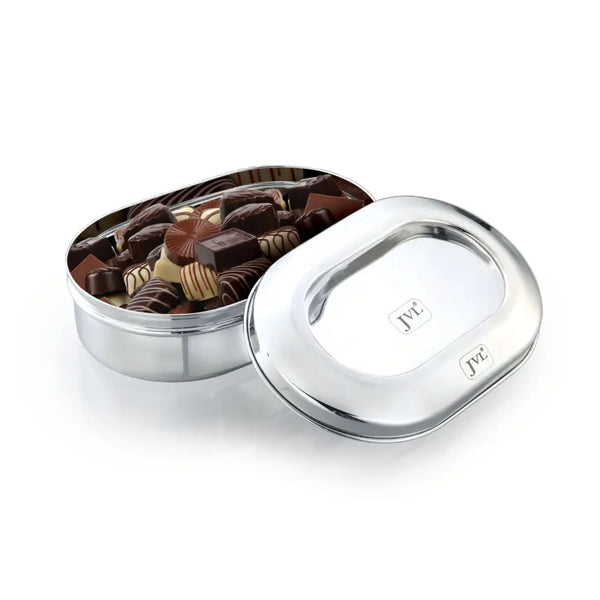
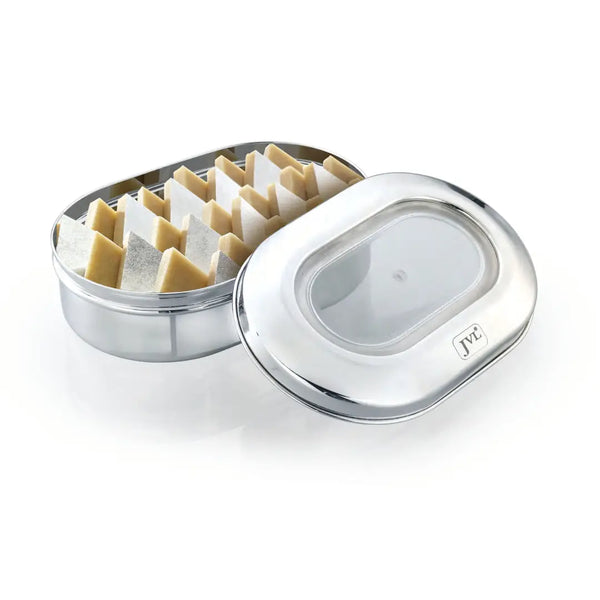
The JVL Galaxy Window Canister brings the convenience of a window panel that allows the contents to be partially visible from outside the canister while maintaining the protection of a stainless steel body. This combination of visibility and protection is ideal for frequently used spices or dry ingredients where quick identification without opening is a practical advantage during a busy cooking session.
The JVL Galaxy Clear Canister offers complete content visibility through a clear body with a stainless steel lid, giving the cook full visual access to stored contents while the quality lid provides the seal integrity needed for freshness preservation. The clear format is particularly popular for display-worthy dry ingredients and spices where the visual abundance of a well-stocked canister is part of the kitchen aesthetic.
The JVL Vintage Clear Combo Set of 6 is the most complete single-purchase spice and ingredient storage solution in the collection. A set of six matching canisters purchased together at a significant combined discount provides uniform sizing, consistent lid quality, and the coordinated aesthetic of a complete matching set from day one. This set is an ideal choice for anyone setting up a new kitchen or refreshing a disorganised existing spice storage system in a single decision.
The JVL Flossy Window Canister and JVL Flossy Clear Canister round out the collection with a design variant that suits kitchens looking for a slightly different aesthetic character while maintaining the same functional standards of airtight storage and food-grade materials.
Explore the complete range, compare the products, and find the right combination for your kitchen in the JVL Canisters and Jars collection.
Spice Storage Tins as a Kitchen Gift in India
Spice storage tins and canister sets have become one of the most appreciated and most practical kitchen gifting choices for Indian weddings, housewarmings, and festive occasions. A complete canister or spice tin set is a gift that is genuinely used every day, clearly valuable and considered in its presentation, and reflects a real understanding of the daily domestic needs of an Indian household.
Unlike more decorative kitchen gifts that may be used occasionally or stored away, a quality spice storage tin set is integrated into the daily cooking routine from the very first week of use and continues earning its place in the kitchen for years. For anyone looking for a meaningful, practical, and elegantly presented kitchen gift for an Indian household, a JVL Classicware canister or spice storage set is one of the most reliably appreciated choices available.
The uniform, well-finished aesthetic of the JVL range makes any set from the collection genuinely presentable as a gift without requiring additional packaging or presentation effort. The quality of the products communicates clearly when the recipient opens the gift and begins using the tins, which is the point at which the lasting impression of a great gift is formed.
How to Clean and Maintain Your Spice Storage Tins
Proper maintenance of spice storage tins is simple and requires very little time if practised consistently after each refilling cycle.
Cleaning Before Refilling with a New Spice
Before refilling a spice tin with a new spice or a fresh batch of the same spice, wipe the interior of the tin with a dry cloth to remove any residual powder from the previous batch. If the tin is being used for a different spice than it previously held, wash it thoroughly with warm water and mild soap, rinse completely, and dry with a clean cloth before leaving it open to air for thirty minutes before refilling. This complete drying step is essential because any moisture remaining in the tin when a new spice is added will accelerate the development of moisture inside the sealed container.
Cleaning the Lid and Seal
Pay particular attention to the lid and the seal area when cleaning spice storage tins. Spice powder inevitably collects in the groove where the lid meets the container body over repeated open-and-close cycles. This accumulated powder can eventually compromise the seal quality of the lid if it is not cleaned away periodically. Use a thin brush, a folded piece of cloth, or a cotton bud to clean the seal groove of the lid every few weeks to maintain the full seal integrity of each tin.
Exterior Maintenance
The exterior of stainless steel spice tins can be wiped with a damp cloth to remove kitchen dust and any spice residue from handling during cooking. For tins with a mirror finish, buffing with a soft dry cloth after wiping restores the reflective quality of the exterior and keeps the tin collection looking sharp and well-maintained on the shelf.
Frequently Asked Questions About Spice Storage Tins
How many spice storage tins does an Indian kitchen need?
Most Indian kitchens use between twelve and twenty spices and masalas regularly. A set of twelve tins covers the full daily essential spice list for most households. Larger households or those that cook more elaborate regional cuisine may benefit from a set of sixteen to twenty tins to accommodate a wider masala collection without resorting to overflow storage in mismatched containers.
Are stainless steel spice tins better than plastic containers?
Yes, significantly. Stainless steel spice tins do not absorb spice aromas into their surface, do not stain from turmeric or chilli, do not interact with spice oils over extended storage, and maintain their lid seal integrity far better than plastic containers over years of daily use. Food-grade stainless steel is the best material for spice storage in an Indian kitchen for all of these reasons.
How do I keep spices fresh in storage tins?
Store spice tins in a cool, dry location away from the stove and away from direct sunlight. Always use a dry spoon when taking spices from the tin to prevent moisture from being introduced into the container. Ensure the lid is fully sealed after every use. Refill tins with fresh spice stock before the existing supply runs completely out, as the introduction of fresh spice into a tin with a very small amount of old spice can affect the quality of the fresh batch.
Can I label my stainless steel spice storage tins?
Yes. Most stainless steel spice tins have a smooth exterior surface that is compatible with adhesive labels, chalkboard labels, or label holders. A clear, consistent labelling system applied across all tins in the set is the final step in creating a truly organised and functional masala storage system.
Where can I buy quality spice storage tins online in India?
The JVL Classicware Canisters and Jars collection offers a complete range of quality canister and storage jar products designed for the Indian kitchen. Available with free shipping on orders above Rs. 999 and Cash on Delivery, the collection makes it easy to set up or upgrade a complete spice and ingredient storage system from a trusted Indian kitchenware brand.
What is the best spice tin set for someone setting up a new kitchen?
The JVL Vintage Clear Combo Set of 6 is the most complete and best-value single purchase for anyone setting up a new kitchen storage system. It provides six matching, uniformly sized canisters at a combined price that is significantly more economical than purchasing individual pieces. Explore it and all other options in the JVL Canisters and Jars collection.
Final Thoughts – The Right Spice Storage Tins Change How Your Kitchen Feels and How Your Food Tastes
Spice storage tins are one of those kitchen purchases that seem straightforward on the surface but whose impact on daily cooking life is disproportionately large relative to the cost and the simplicity of the decision. The right set of airtight, food-grade, uniformly sized spice tins preserves the flavour of every masala in your collection, organises your spice shelf into something you genuinely enjoy navigating, eliminates the daily friction of searching for the right container, and transforms the aesthetics of the most-used storage area in the kitchen.
In an Indian kitchen where spices are not just ingredients but the heart of every dish, giving them the right storage is not a minor detail. It is a direct investment in the quality of every meal cooked from that kitchen from the day the tins are filled onwards.
Explore the complete JVL Classicware Canisters and Jars collection and find the right spice storage system for your kitchen today.