
Posted by Jvl Classicware
on August 29, 2026

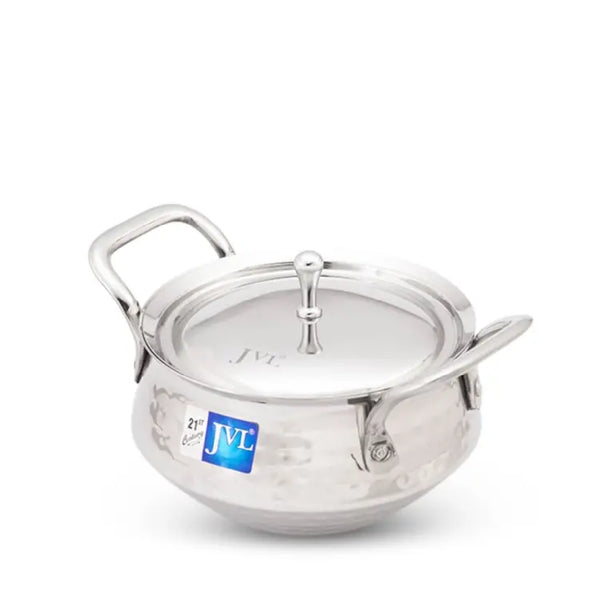
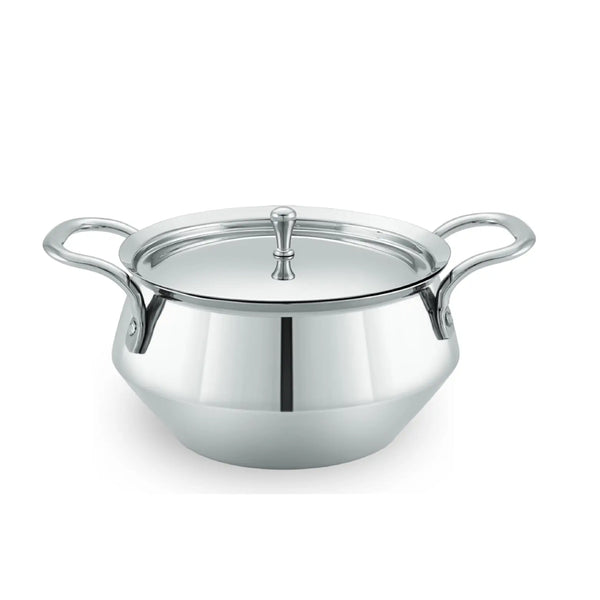
A good stainless steel kadai with lid is one of those kitchen essentials you may not appreciate until you start cooking with one every day. From everyday sabzi and dal to rich gravies, curries, sautéed vegetables and deep-fried snacks, a deep kadai with a well-fitting lid can make cooking more convenient while helping retain moisture, heat and aroma.
For Indian households, the lid is not simply an extra accessory. It changes how the food cooks. When a curry is covered, steam stays inside the vessel for longer, helping ingredients cook evenly and reducing unnecessary moisture loss.
If you are planning to buy a kadai with lid online, the real question is not just which kadai looks good. You also need to consider the material, size, lid type, handle design and whether it works with your cooktop.
Why Choose a Stainless Steel Kadai With Lid?
Stainless steel remains a practical choice for everyday Indian cooking because it is durable, food-safe and easy to maintain. Unlike cookware that depends on a coating for its cooking surface, quality stainless steel can handle regular cooking and high temperatures without relying on a non-stick layer.
A kadhai with lid adds another useful dimension. The covered cooking environment helps reduce evaporation and keeps moisture and aroma inside the vessel.
This is particularly useful when preparing:
- Dal and lentils
- Paneer and vegetable curries
- Rajma and chole
- Gravy-based dishes
- Sautéed vegetables
- Rice-based dishes
- Deep-fried snacks
- Slow-cooked recipes
JVL Classicware's stainless steel cookware range is designed around the needs of Indian kitchens, with food-grade stainless steel options and cookware designed for everyday use. Its cookware range also includes options compatible with gas and induction cooktops.
Glass Lid or Steel Lid Which Is Better?
One of the most common questions when choosing a kadai with glass lid stainless steel construction is whether glass or steel makes the better cover.
Both have advantages.
Stainless Steel Lid
A stainless steel kadai with steel lid is a strong, durable combination. A steel lid is less likely to develop cracks or break from accidental impact and maintains the traditional all-steel cookware design.
It works particularly well when you want:
- Long-term durability
- A fully stainless steel construction
- Easy maintenance
- A simple, traditional appearance
Glass Lid
A glass lid is useful when you want to monitor your food without repeatedly lifting the cover.
You can check the simmering curry, bubbling dal or cooking vegetables while keeping the kadai covered. This can help reduce unnecessary heat and steam loss.
For everyday cooking, many home cooks prefer a covered kadai with a transparent glass lid because visibility makes it easier to judge the cooking stage.
However, the quality of the lid matters more than simply choosing glass. A good lid should sit securely on the vessel and have a suitable heat-resistant knob.
The simple choice: Choose a glass lid if visibility matters to you. Choose a steel lid if maximum durability and an all-steel design are your priorities.
How a Lid Improves Everyday Indian Cooking
A cooking kadai with tight lid can be especially useful for recipes that need controlled moisture.
Consider making a vegetable curry. Without a lid, steam escapes continuously, causing the liquid to reduce faster. With a properly fitted lid, more steam remains inside the vessel.
This helps with:
Moisture Retention
Steam remains inside the covered kadai, helping ingredients cook in a more moist environment.
Better Aroma
Covering food while it simmers helps keep cooking aromas inside the vessel instead of allowing them to escape immediately.
Controlled Simmering
A lid can help maintain a stable cooking environment when preparing curries, dals and other slow-cooked dishes.
Less Splattering
When cooking gravy or sautéing ingredients, a lid can also help reduce splashes around the stovetop.
The same principle is useful in JVL's multi-kadai designs. Its 5 in 1 Triply Multi Kadai, for example, includes a stainless steel lid with a small steam-release hole designed to allow excess steam to escape during steaming.
What Size Kadai Should You Buy?
Size is one of the most important decisions when choosing a steel kadhai with lid.
A kadai that is too small can make stirring difficult and increase the chances of spilling. A very large kadai, on the other hand, may be unnecessary for everyday meals.
As a practical starting point:
|
Household |
Suggested Kadai Size |
Best For |
|
1–2 people |
20–22 cm |
Small portions, tadka, vegetables |
|
2–4 people |
22–24 cm |
Everyday sabzi, dal, curries |
|
4–6 people |
24–26 cm |
Family meals and larger gravies |
|
6+ people |
26 cm+ |
Batch cooking and entertaining |
For most Indian families, a 24cm to 26cm kadai offers a useful balance between cooking capacity and everyday handling.
If you frequently prepare large portions of curry, biryani or fried food, choosing a deeper model can provide more usable cooking space.
Is a Stainless Steel Kadai Suitable for Induction?
If you have an induction cooktop, always check the manufacturer's specifications before purchasing.
An induction kadai with lid needs a compatible base that can work with induction heating. Stainless steel cookware may be suitable for induction when it has the appropriate magnetic base construction.
JVL states that most of its stainless steel cookware is compatible with gas, electric and induction stovetops because of its magnetic base, while also recommending that buyers check the specific product description for confirmed compatibility.
This makes cooktop compatibility an important consideration when choosing cookware for a modern Indian kitchen where gas and induction may both be used.
Why Triply Construction Can Be Worth Considering
If you are comparing a standard stainless steel kadai with a triply stainless steel kadai with lid, construction should be part of the buying decision.
Tri-ply cookware uses multiple layers of metal to improve heat distribution and cooking performance. Instead of concentrating heat in one small area, the construction is designed to distribute heat more evenly across the cooking surface.
JVL's 5 in 1 Triply Multi Kadai uses tri-ply construction across its bottom and is designed for steaming, frying, boiling and sautéing. The product is available in 2.5L and 3.5L variants and is designed for both gas and induction cooktops.
This kind of multi-purpose kadai can be useful if you want one vessel to perform several cooking functions rather than buying separate cookware for every task.
Stainless Steel Kadai vs Non-Stick Kadai
If you are deciding between stainless steel and non-stick cookware, consider how you normally cook.
|
Feature |
Stainless Steel Kadai |
Non-Stick Kadai |
|
Durability |
Excellent |
Depends on coating |
|
High-heat cooking |
Suitable |
Usually requires more care |
|
Metal utensils |
Generally suitable |
Can damage coating |
|
Maintenance |
Easy with proper care |
Requires coating-friendly utensils |
|
Deep frying |
Suitable |
Depends on product |
|
Sautéing |
Excellent |
Excellent |
|
Long-term use |
Very good |
Coating may wear over time |
Stainless steel is particularly attractive if you want a durable everyday vessel that can handle a variety of Indian cooking techniques.
What Features Should You Check Before Buying?
Before you buy kadai with lid online, look beyond the product photograph.
1. Material
Look for food-grade stainless steel and check the manufacturer's stated steel grade where available.
2. Base Construction
If even heating and induction compatibility are priorities, check whether the kadai has a suitable encapsulated or tri-ply base.
3. Lid Fit
A lid should sit securely on the kadai. A loose cover can allow excessive steam to escape.
4. Handle Design
Look for comfortable, secure handles that make lifting and moving the kadai easier. Remember that handles can still become hot during prolonged cooking, so use appropriate protection when necessary.
5. Size
Choose the diameter and depth according to your household size and cooking habits rather than simply buying the largest available model.
6. Cooktop Compatibility
If you use induction, verify induction compatibility on the product page before purchasing.
7. Ease of Cleaning
A smooth stainless steel surface is relatively easy to clean with warm water, mild dish soap and a soft sponge. JVL recommends avoiding harsh scrubbing and drying stainless steel cookware after washing to help maintain its finish.
A Kadai With Lid Is More Than a Frying Pan
A deep fry pan with lid or covered kadai can do considerably more than frying.
Its depth makes it useful for curries and gravies, while the wide cooking surface makes sautéing practical. Add a properly fitting lid and you have a vessel that can move from high-heat cooking to covered simmering with ease.
For Indian kitchens, that versatility matters. The same kadai can be used for morning vegetables, afternoon dal, evening curry and weekend snacks.
This is why a good kadai set with cover can be a worthwhile addition to a kitchen, particularly when the cookware is built for repeated daily use.
When Should You Choose a Kadai Set?
A kadai with lid set India shoppers can consider is useful when they need multiple sizes for different cooking tasks.
For example, a smaller kadai can handle tadka, smaller vegetable portions and quick sautéing, while a larger deep kadai can be reserved for family-sized curries, frying and entertaining.
If you already own several pots and pans, however, a single high-quality kadai in the size you use most frequently may be the smarter purchase.
The goal is not to own more cookware. It is to own the right cookware.
JVL's Approach to Stainless Steel Cookware
JVL Classicware focuses on cookware and kitchenware designed for modern Indian kitchens. Its stainless steel collection includes cookware intended for everyday cooking, with options across different shapes, capacities and cooking requirements.
For buyers looking for a versatile covered cooking solution, the 5 in 1 Triply Multi Kadai is particularly relevant. It combines a stainless steel kadai and lid with steaming and cooking accessories, and its tri-ply bottom is designed for even heat distribution on gas and induction cooktops.
If you are looking beyond a kadai and want dedicated steaming cookware, JVL's 4 in 1 Classic Idly Pot with Triply Base Stainless Steel also combines a stainless steel construction with a tri-ply base and induction compatibility.
How to Choose the Right Kadai for Your Kitchen
If you are still comparing options, use this quick checklist:
For everyday family cooking: Choose a 22–26cm deep stainless steel kadai with a secure lid.
For curries and gravy dishes: Prioritize depth and a well-fitting lid for better moisture retention.
For induction cooking: Confirm that the base is induction compatible.
For easy monitoring: Consider a glass lid.
For maximum durability: Consider a stainless steel lid.
For versatile cooking: Look for a tri-ply or multi-purpose kadai.
For multiple cooking tasks: A kadai set with cover or multi-kadai can be more practical than buying separate vessels.
Final Verdict
The best stainless steel kadai with lid is not necessarily the biggest or most expensive one. It is the one that matches your family's cooking volume, stove type and everyday recipes.
For most Indian homes, a 22–26cm deep kadai is a practical starting point. A secure lid helps retain moisture and heat when simmering curries, dal and gravy dishes, while stainless steel offers the durability needed for everyday cooking.
If you want visibility while cooking, choose a quality glass lid. If durability and an all-steel construction matter more, a stainless steel lid is a dependable choice.
And if you want one vessel that can do more than ordinary kadai cooking, a tri-ply multi-kadai can combine frying, sautéing, boiling and steaming in one setup.
For buyers ready to compare options, JVL Classicware'sstainless steel Handi & Pot collection is a natural place to start, while its 5 in 1 Triply Multi Kadai provides a more versatile covered cooking option for modern Indian kitchens.
Frequently Asked Questions
Is stainless steel good for a kadai?
Yes. Food-grade stainless steel is durable, rust-resistant and suitable for everyday Indian cooking. It is particularly useful for cooking a wide range of ingredients without depending on a non-stick coating.
Which is better, a glass lid or steel lid for a kadai?
A glass lid is useful when you want to monitor food without removing the cover. A steel lid is a strong, durable option and suits buyers who prefer an all-stainless steel design.
What is the best size of kadai for a family of four?
A 22–26cm kadai is generally a practical range for a family of four, depending on how much food you normally prepare.
Can a stainless steel kadai be used on induction?
Yes, if the kadai has an induction-compatible base. Always confirm the specific product specifications before purchasing.
Is a deep kadai better for Indian cooking?
A deeper kadai is useful for curries, gravies, frying and larger portions because it provides more vertical cooking space and helps reduce splashing.
What should I look for in a kadai with lid?
Check the stainless steel quality, size, depth, lid fit, handle design, base construction and compatibility with your gas or induction cooktop.
Can I buy a stainless steel kadai with lid online?
Yes. When shopping online, compare the material, dimensions, capacity, lid type, base construction and manufacturer's compatibility information rather than relying only on product photographs.