
Posted by Jvl Classicware
on November 21, 2026

Milk is the one liquid that boils over on almost every stove, even a careful one. Water simmers politely; milk, thanks to the fat and protein suspended in it, builds a foam layer that traps steam until it suddenly pushes past the rim. A dedicated milk boiler stainless steel design exists specifically to solve this, but the collection usually comes in more than one handle style and more than one capacity, and picking between them matters more than most buyers expect.
Why milk overflows when water never does
Plain water boils and releases steam cleanly. Milk's fat and protein content forms a surface layer that traps rising steam bubbles underneath it, and once that layer builds past a certain point, it ruptures all at once and sends milk over the rim. A wide, shallow pan slows this somewhat by giving the foam more room to spread, which is why some cooking guides recommend one, but it doesn't eliminate the risk on its own.
What the double wall is actually doing
A milk boiler's defining feature is its double-wall construction: an outer vessel holds a small amount of water, and the inner vessel holds the milk. The water in the outer chamber heats first, and the steam pressure it builds does two jobs at once, warming the milk gently from all sides rather than just from the base, and triggering a whistle once that steam pressure reaches boiling point. That gentler, indirect heat is what keeps the milk from scorching at the bottom while also giving you an audible cue instead of requiring you to stand over the stove.
The steam-whistle signal, in plain terms
The whistle sits on top of the water chamber, not the milk itself, so what it's actually signaling is that the water around the milk has reached boiling temperature, a reliable proxy for the milk itself being ready or close to it. This is also why overfilling the water chamber causes water to spill from the whistle opening rather than the milk boiling over, a common first-use mistake that looks alarming but isn't a defect. For the full mechanics of how the steam pressure and double-wall design interact, our deep-dive guide on how a milk boiler works walks through it step by step.
Single handle vs double handle which one fits your kitchen
When single-handle makes sense
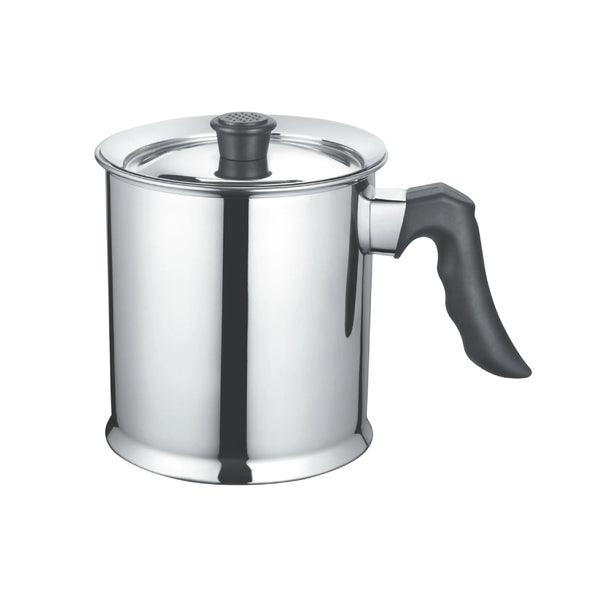
A single-handle milk boiler is lighter to lift one-handed and takes up less space both on the stove and in storage, which suits anyone boiling smaller quantities, a cup or two at a time, for their own tea or coffee. The tradeoff is stability: tilting and pouring with one handle on a fuller vessel asks more of your wrist and grip than a two-handed pour does.
When double-handle is worth the extra grip
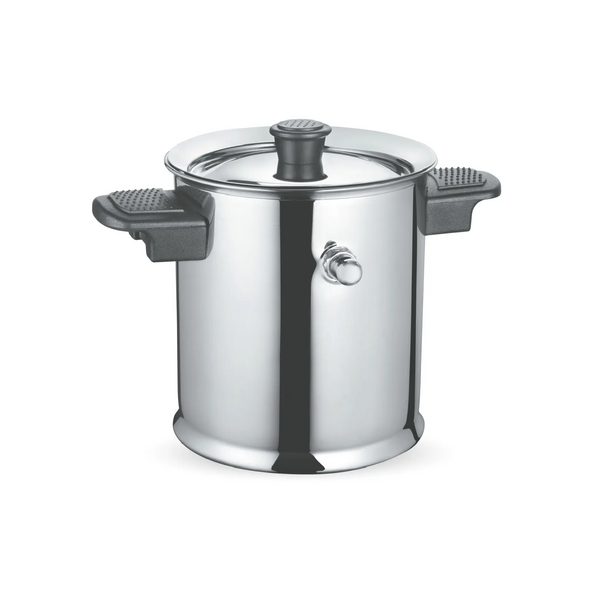
Once you're regularly boiling closer to the top capacity of a vessel, for a family's morning chai, or for a batch destined to become paneer or curd, a double-handle design earns its place. Two-handed control makes tilting and pouring a heavier, fuller vessel noticeably steadier, which matters most in the exact moment the milk is hottest and most likely to splash if handled awkwardly.
Picking the right capacity for your household
1 to 1.5 litres for one or two people
A smaller milk boiler suits a one or two-person household boiling milk for tea, coffee, or a small glass at a time. Buying bigger than this "just in case" usually means heating a mostly-empty vessel most days, which wastes both gas and the time it takes for a larger volume of water in the outer chamber to come up to temperature.
2 to 3 litres for a larger family or regular dairy-making
A bigger capacity makes more sense for a household that boils milk daily for several people, or that regularly turns milk into paneer, curd, or khoya, all of which need a larger single batch rather than several smaller ones. The Milk Boiler collection spans this exact range, from compact single-handle options through to the larger double-handle sizes built for bigger batches.
Flat-base and other variants worth knowing about
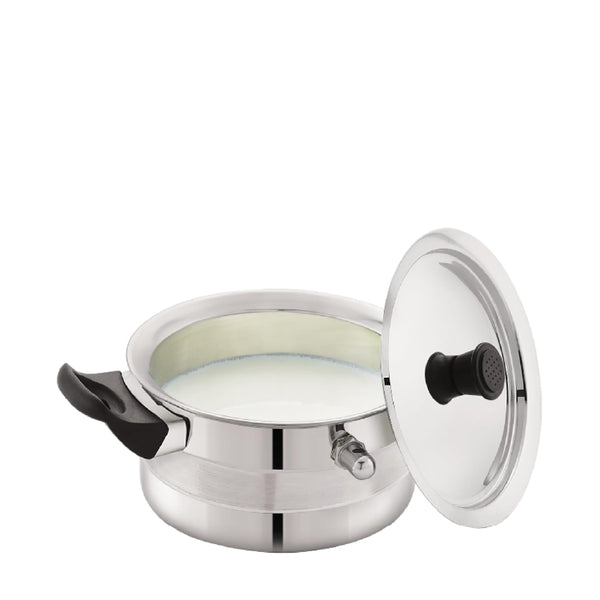
Beyond handle count and capacity, a flat milk boiler built for smaller families trades some of the curved base's heat-spreading advantage for a more compact footprint and a more stable stovetop stance, which suits kitchens where counter space near the stove is tight. None of these variants change the core double-wall mechanism described above, only how the vessel sits and handles day to day.
Care that keeps the inner steel from discoloring
The inner surface of a milk boiler can discolor over time, usually appearing as a dull tint rather than actual damage, and it's almost always related to water hardness rather than a flaw in the steel itself. Rinsing the inner vessel promptly after each use rather than letting milk residue sit, and avoiding abrasive scrubbers on the inner surface, slows this considerably. The cool-touch handles and lid knob common to most designs are typically bakelite rather than steel, so they should be hand-dried rather than left wet, since trapped moisture at the joint is what eventually loosens a handle's grip over years of use. Our broader kitchen accessories guide covers grade verification and daily care in more depth if you're maintaining more than just the milk boiler.
Frequently asked questions
Why does my milk boiler's whistle blow before the milk actually boils?
The whistle responds to the water in the outer chamber reaching boiling temperature, not the milk directly. Since the water chamber is usually smaller and heats a bit faster than a full milk load, the whistle is a reliable signal that the milk is at or very near boiling point, even if it sounds a few moments ahead of the milk's own visible boil.
Is it normal for water to spill out of the whistle while boiling milk?
Yes, and it almost always means the outer water chamber was filled too close to the top. The fix is simple: fill the water chamber to the level marked or recommended, not all the way, since steam needs room to build pressure and escape through the whistle rather than pushing water out alongside it.
Should I choose a single-handle or double-handle milk boiler?
A single-handle design suits smaller, lighter batches boiled for one or two people, since it's easier to lift and pour one-handed. A double-handle design is worth the extra grip once you're regularly boiling closer to full capacity, since two-handed control makes pouring a hot, heavier vessel noticeably steadier.
What capacity milk boiler do I actually need?
For one or two people boiling milk for tea or coffee, a 1 to 1.5 litre vessel is usually enough. For a larger family, or for households that regularly make paneer, curd, or khoya in one batch, a 2 to 3 litre capacity avoids repeated smaller boils and handles the larger single batch these preparations need.
Why does the inside of my milk boiler look discolored after a few months?
This is usually a mineral deposit from water hardness rather than damage to the steel itself. It's cosmetic in most cases and doesn't affect food safety as long as the surface is otherwise intact. Rinsing promptly after use and avoiding abrasive scrubbers on the inner surface slows this discoloration considerably.
Can a milk boiler be used on an induction stove?
Most stainless steel milk boilers with a flat, induction-compatible base work on both gas and induction stovetops, but it's worth confirming the specific product's base type before buying if induction is your primary stove, since not every traditional design includes an induction-ready base.
How is a milk boiler different from just using a regular saucepan?
A regular saucepan heats milk directly from the base with no buffer, which makes scorching and sudden boilovers more likely without constant attention. A milk boiler's double-wall design heats the milk indirectly through a water chamber, which both slows the heating and gives you an audible whistle cue, letting you step away from the stove with far less risk of a mess or a scorched pot.