
Posted by Jvl Classicware
on November 19, 2026

Most people shopping for a stainless steel serving set compare photos: mirror shine versus matte, round versus square, a six-piece box versus a twelve-piece one. None of that tells you whether the bowl will still look good after eighteen months of festival dinners, or whether it will keep your paneer warm for the twenty minutes between kitchen and table. Those answers come from three things the product photo never shows: the steel grade, the wall construction, and how closely the pieces match what you actually serve.
What a serving set is actually being asked to do
A serving bowl at a dinner table has a harder job than a storage container in a cupboard. It goes from stovetop heat to a tablecloth, gets ladled into repeatedly for an hour, sits next to acidic things like rajma or tamarind chutney, and then gets scrubbed. A set that looks identical to a cheaper one in a listing photo can behave very differently under that routine, and the difference almost always traces back to what’s inside the metal rather than what’s on the surface.
The grade stamped on the base matters more than the shine
Chromium and nickel content, not polish, is what decides whether a bowl holds up. Food-grade 304 stainless steel runs about 18 percent chromium and 8 percent nickel, a composition built for corrosion resistance. The cheaper alternative, 202-grade, swaps most of that nickel for manganese, which cuts cost but also cuts how well the metal resists rust and acid over time.
How to tell 304 from 202 before you buy
You often can’t tell by looking, and a magnet test is unreliable since both grades can test as mildly magnetic depending on how they were worked. What actually works is checking the listing or the base stamp for a grade number, or looking for compliance with IS 14756, the Indian standard that governs stainless steel utensils. A seller who states the grade plainly is usually one worth trusting; a listing that only says “stainless steel” with no number attached is the one to question.
Why finish is cosmetic, not structural
Mirror finish and matte finish are the same 304 or 202 steel polished differently. Mirror shows fingerprints and water spots more readily; matte hides them but shows scratches more visibly over years of scrubbing. Neither finish adds or removes corrosion resistance, so picking between them is purely a question of which one matches your table and how much wiping down you’re willing to do after each meal.
Double-wall construction is the real upgrade over a single sheet of steel
A single-wall bowl is one layer of steel with nothing between the food and the table it’s resting on, which means heat (or cold) escapes almost as fast as it transfers in. A double-wall bowl traps a layer of air, or in some designs a vacuum, between an inner and outer shell, and that gap is what actually slows heat loss.
What the gap buys you in practice
The range here is wide and depends heavily on how tight that gap is sealed. Commercial double-wall serving bowls without vacuum sealing commonly hold temperature for around 40 minutes, while vacuum-insulated designs with a locking lid can hold warmth for closer to three hours. That’s a meaningful difference if your serving window is a two-hour dinner rather than a five-minute transfer from kitchen to table, so it’s worth checking exactly what a specific bowl promises rather than assuming “double wall” means any particular number of hours on its own.
Where a single-wall piece still makes sense
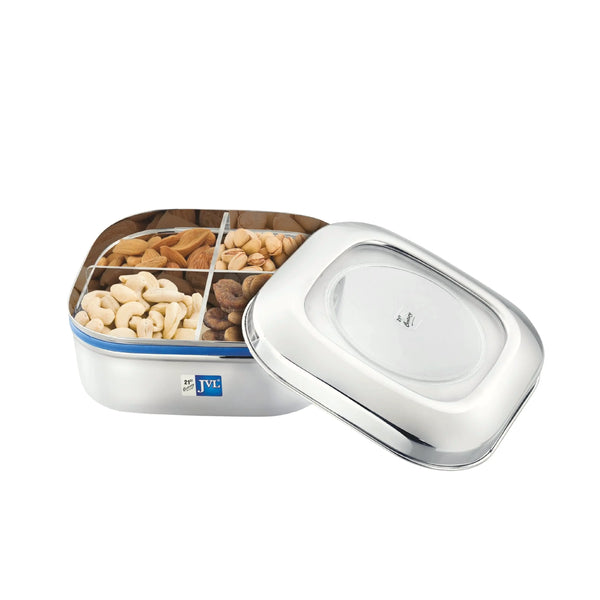
Not everything on a serving table needs insulation. A dry fruit tin or a spice container isn’t fighting heat loss, so the thinner, lighter single-wall construction common in those pieces is a sensible trade rather than a shortcut. Save the double-wall budget for whatever actually leaves the stove hot: dal, sabzi, rice, or anything meant to stay warm through a full meal rather than get eaten in the first five minutes.
Matching pieces to how you actually entertain
A set is only useful if its individual pieces match your real serving habits rather than a generic box someone else assembled. If festival trays of dry fruit and namkeen are a regular feature at home, a dedicated dry fruit and spice tin with an airtight seal earns its shelf space more than a decorative bowl that sits empty most weeks. If your meals center on rotis staying warm through dinner, a dedicated hot case does that job better than a general bowl pressed into service. And for a one-pot dinner, a cook-and-serve pot that goes straight from stove to table skips a transfer step and the dent risk that comes with it.
The Serving Essentials range covers this spread deliberately: double-wall bowls in matte and mirror finish for anything meant to stay warm, airtight dry fruit tins for festival trays, and a thermal rice cooker and serve pot for pieces that move straight from heat to table. Picking across categories rather than buying a single boxed set usually serves an actual household better than one uniform pattern.
Care that keeps a set looking new for years
Steel grade decides how well a bowl resists corrosion, but daily habits decide how long the finish actually lasts. Acidic foods like tamarind, tomato-based gravies, or pickled items left sitting in a bowl overnight will dull even good 304 steel faster than regular use would. Rinsing promptly rather than letting food sit, avoiding steel wool on mirror-finish pieces, and drying thoroughly before storage (standing water is what starts rust, not the steel itself under normal conditions) are the three habits that separate a set that still looks new after five years from one that looks tired after one.
Our guide to stainless steel kitchen accessories goes deeper into grade verification and daily care if you’re outfitting more than just the serving shelf.
Frequently asked questions
What’s the difference between 304 and 202 stainless steel for a serving set?
304-grade contains around 18 percent chromium and 8 percent nickel, giving it strong resistance to rust and acidic foods over years of use. 202-grade replaces much of that nickel with manganese, which lowers the price but also lowers how well the metal holds up against corrosion and acidic dishes over time.
Does mirror finish or matte finish last longer?
Neither finish is more durable in terms of corrosion resistance, since both sit on the same grade of steel underneath. Mirror finish shows fingerprints and water spots more easily day to day, while matte finish tends to show scratches more visibly after years of scrubbing. The choice is really about appearance and maintenance preference, not longevity.
How long does a double-wall serving bowl actually keep food warm?
It varies significantly by design. Simple double-wall bowls without vacuum sealing often hold heat for around 40 minutes, while vacuum-insulated bowls with a locking lid can hold warmth for roughly three hours. Check the specific product’s claim rather than assuming all double-wall pieces perform the same.
Can I check the steel grade myself before buying?
A magnet test is unreliable, since both 304 and 202 grades can show mild magnetism depending on how the sheet was processed. The more reliable approach is checking the product listing for an explicit grade number or a reference to IS 14756, the Indian standard for stainless steel utensils, rather than relying on touch or a magnet.
Is single-wall stainless steel bad for serving bowls?
Not at all for the right use. Single-wall is lighter and less expensive, and it’s a sensible choice for items that aren’t fighting heat loss, like a dry fruit tin or a spice container. Reserve double-wall construction for pieces meant to hold hot or cold food through an entire meal.
What causes stainless steel serving pieces to rust even though they’re supposed to resist it?
Standing water left after washing, combined with acidic foods like tamarind or tomato gravies sitting in the bowl for extended periods, is the usual cause. Even 304-grade steel can show surface spotting if it’s stored wet or left unwashed with acidic residue for long stretches. Drying thoroughly before putting pieces away prevents most of this.
Should I buy a boxed serving set or individual pieces?
It depends on how varied your serving needs are. A boxed set is convenient if your meals are fairly uniform, but most households end up needing a mix: insulated bowls for hot dishes, airtight tins for dry snacks, and maybe a dedicated pot for one-pot meals. Buying across categories rather than one fixed box usually matches real use better.