
Posted by Jvl Classicware
on November 17, 2026

Walk into any Indian kitchen mid-cook and the things actually in someone’s hands are rarely the cookware. It’s the chopping board catching onion skins, the spice tin someone’s fishing dhania powder out of, the little dish holding a wet bar of soap by the sink. Kitchen accessories are the small, unglamorous items that get touched fifty times a day while the pressure cooker sits untouched for an hour, and that daily handling is exactly what should decide which ones you buy.
The chopping board material matters less than you’d think
Sellers often push stainless steel chopping boards on hygiene claims that go further than the evidence actually supports. Some marketing around steel boards cites studies that don’t hold up well under scrutiny, and the honest research picture is mixed: a few comparisons found bacteria surviving longest on plastic, not wood or steel, and wood’s natural moisture-wicking can even kill bacteria faster than people expect.
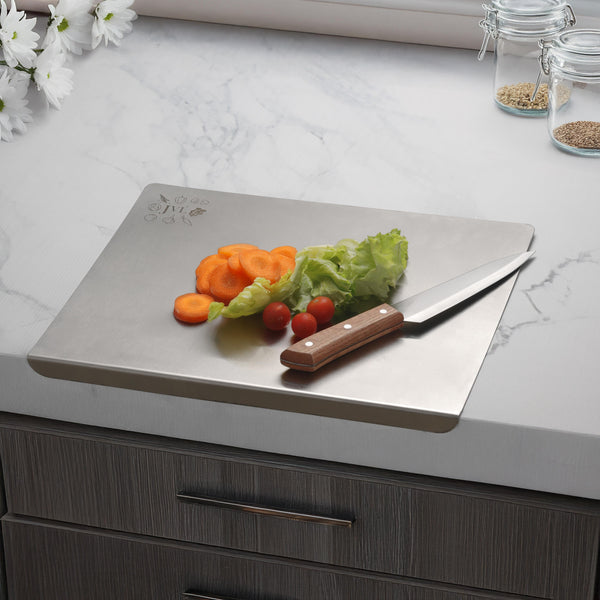
Here’s what does hold up: a board’s surface condition affects hygiene more than its material, and stainless steel in good condition barely absorbs odors or stains and stays easy to disinfect, even though it dulls a knife edge faster than wood or plastic will. That’s a fair trade for a board you wipe down several times a day rather than deep-clean once a week.
A stainless steel board with a built-in counter-top lip, like the non-slip option in JVL’s kitchen accessories range, solves a different problem entirely: a board that slides while you’re cutting is a bigger everyday risk than whatever’s living on its surface. For raw meat or fish prep specifically, where quick, thorough cleanup matters more than knife-edge longevity, steel still makes sense.
Vegetable choppers the shape matters more than the spec sheet
JVL’s two chopper models, rectangular and capsule-shaped, both use stainless steel blades and sit at the same price, so the real choice between them comes down to how your counter is shaped and how you store it, not which one chops better. A rectangular chopper tends to sit flatter in a drawer. A capsule-shaped one is easier to grip with one hand over the sink.
Either style saves real time on the small, repetitive jobs: onions for tempering, garlic for a dal, a quick dice before frying. It won’t replace a knife for anything that needs precision, like julienning for a stir-fry, but for the three onions you chop before most Indian meals, it’s the accessory most likely to actually get used daily rather than pulled out for one recipe and forgotten.
Spice and dry fruit tins airtight matters, see-through is a trade-off
The clearest consensus across food storage guides is that airtight containers protect spices from moisture, light, and air, and that’s what actually determines how long they stay potent, not how good they look on a shelf. Ground spices typically hold their flavor for six months to a year in a properly sealed container; whole spices can last two to three years before they’re worth replacing.
That’s where a small design choice matters more than it looks. JVL sells both a Vista Airtight Dry Fruit and Spice Tin and a Spice Tin with a see-through lid. A transparent lid helps you spot what’s inside without opening it, but it works against one of the two things spices actually need protection from, since light exposure speeds up flavor loss over time. If what’s inside is dry fruit or a spice you use constantly and refill often, the see-through lid is a fair trade for convenience. For something you buy occasionally and want to last, like whole cardamom or a less-used spice blend, an opaque tin kept in a cabinet does a better job.
The same airtight logic extends to the butter dish in the same collection: a sealed container keeps butter from picking up the smell of everything else in the fridge, which matters more in a shared fridge than most people expect until it happens once.
Soap dishes and soap boxes the dual-use accessory nobody budgets for
Four of the eleven products in this collection are soap dishes or soap boxes, and the listing covers both kitchen and bathroom use for each one. That’s a fair description of how people actually buy them: the same style often ends up at the kitchen sink and the bathroom basin in the same order.
The practical difference between the models is less about shape and more about what you’re storing. A single soap dish, rectangular, capsule, or the “Ultra” variant, suits one bar of soap and drains water away from it so it doesn’t dissolve into a puddle. A twin soap box is built for two, which matters at a kitchen sink where a dishwashing bar and a hand soap bar often compete for the same ledge space. If your kitchen runs on liquid soap instead of a bar, none of these solve your actual problem, and a simple dispenser bottle is the better buy regardless of how good the dish looks.
A double-walled cup, and why the coaster matters more than it seems
The double-walled stainless steel cup with a matching coaster is a smaller accessory, but it solves two separate annoyances at once: the double wall keeps chai or coffee hot longer without burning your hand on the outer surface, and the coaster stops condensation rings from forming on a counter or table. It’s a minor purchase next to a chopping board, but it’s the kind of accessory that quietly prevents a dozen small counter stains over a year.
Building a kitchen accessories set that actually gets used
Buying all eleven items at once is rarely the right call. A reasonable starting set looks like three things: one chopping board, one vegetable chopper in whichever shape suits your drawer, and one airtight tin for whatever you refill most often, dry fruit or your most-used spice. Everything else, the soap dishes, the second chopper shape, the cup and coaster, is worth adding only once you know which gap you’re actually filling.
If you’re setting up a kitchen from scratch rather than adding one accessory at a time, it’s worth looking at how these pieces fit with the rest of a kitchen’s setup. JVL’s Cooking Essentials range covers the vessels that do the actual cooking, while the Canisters & Jars and Steel Storage Boxes collections handle pantry organization beyond a single spice tin. For how a full set of containers can work together rather than as one-off purchases, the guide on building a container combo is a useful next read. And if lunch boxes are the next gap in your kitchen, the breakdown of what makes a steel tiffin worth buying picks up where this one leaves off.
Frequently asked questions
Are stainless steel kitchen accessories actually more hygienic than plastic ones?
Not in every case, and the research is more mixed than most marketing suggests. What’s reliably true is that steel in good condition resists stains and odors well and is easy to clean thoroughly, which matters more for daily-use items like chopping boards and tins than small differences in bacterial counts.
What’s the difference between the rectangular and capsule vegetable choppers?
Mostly shape and grip, not performance. Both use stainless steel blades and work the same way. A rectangular chopper stores flatter in a drawer; a capsule shape is easier to hold one-handed over a sink.
Should I buy a spice tin with a see-through lid or an opaque one?
A see-through lid is convenient for spices you refill often and want to check at a glance. An opaque tin protects light-sensitive spices better over longer storage, which matters more for whole spices or blends you don’t use up quickly.
How long do spices actually stay fresh in an airtight tin?
Ground spices generally hold their flavor for six months to a year. Whole spices, like whole cardamom or coriander seeds, can stay potent for two to three years if the container seals properly and stays away from heat and light.
Do I need separate soap dishes for the kitchen and the bathroom?
Not necessarily, since most of these are sold for both. The choice that matters more is single dish versus twin box: a single dish suits one bar of soap, while a twin box is built for two bars sharing the same sink ledge.
Is a stainless steel chopping board better than wood for raw meat or fish?
It’s a reasonable choice for that specific job, mainly because it’s non-porous and easy to disinfect thoroughly after use. For general vegetable prep where deep sanitizing matters less, the difference between materials is smaller than it’s often made out to be.
What should go on a starter list of kitchen accessories?
One chopping board, one vegetable chopper, and one airtight tin for whatever you refill most often covers the daily basics. Soap dishes, a second chopper shape, and smaller serving pieces like a double-walled cup are worth adding once you know what’s actually missing from your routine.